
We - Maison Martin Margiela
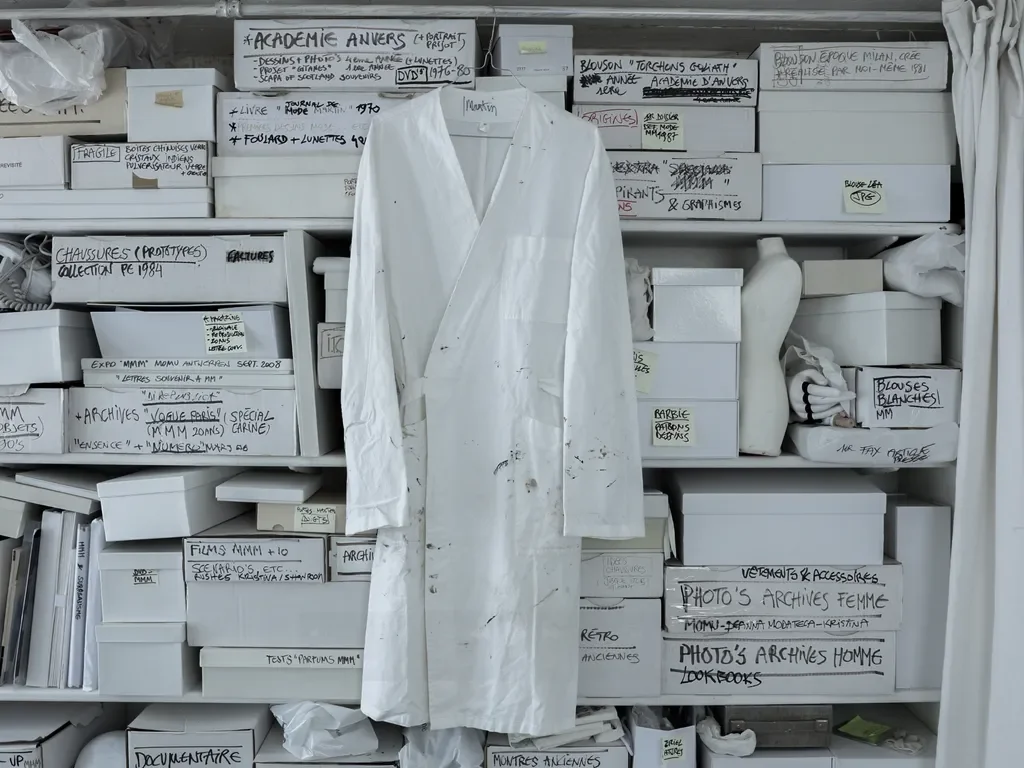
There’s something interesting about the colour white. It’s clinical, clear and timeless. And if you know anything about owning something in white, it’s hard to keep clean. Every stain, scuff and mark is easy to create and hard to remove. Everything owned in the colour white tells a story, presenting its history within it’s colouring and age.
The idea that something, in this case clothing, can hold history, purpose and a life within itself, and further to that, be repurposed to become something ‘new’, is the basis of Maison Margiela.
Known at the time as Maison Martin Margiela, this brand was one of the first to repurpose already made clothing and objects in their designs. Debuting with their SS89 collection at Paris Fashion Week, Margiela instantly made their point-of-view known.
The invitations were sent via telegram, with the show itself to be at the Cafe De La Gare, in the 4e arrondissement of Paris. This is notable because most of the Paris fashion shows were held in the 1er arrondissement, often right next to the Louvre. Along a similar vein, the seating was not allocated by stature or importance (like the most important guests reserved for the front row), as guests drew lots on who could sit where.
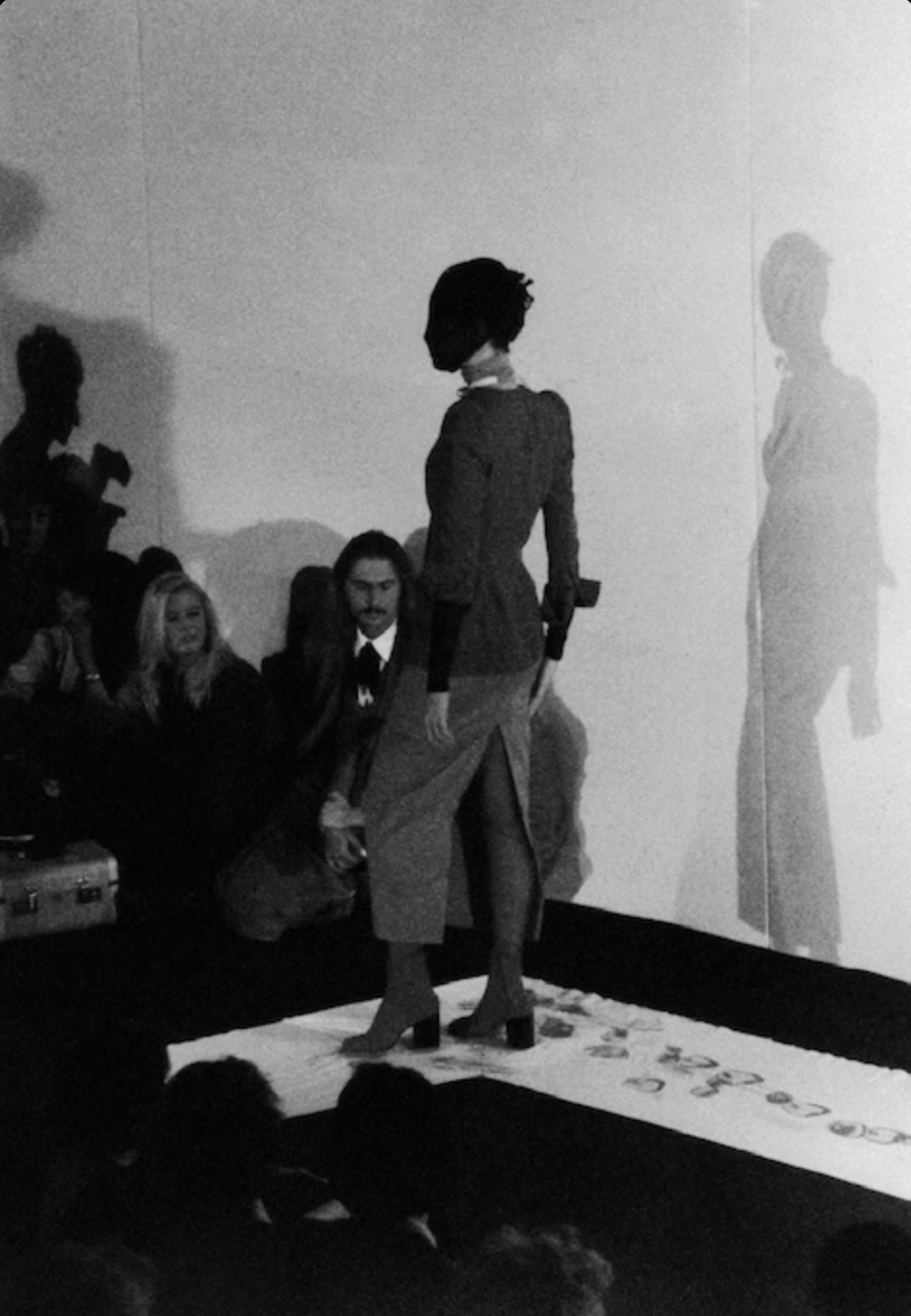
The show begins with Guess I’m Falling in Love by the Velvet Underground playing. Models walk out with unkempt hair and messy makeup, combined with the deconstructed and reinvented nature of the garments. The silhouette of overcoats and blazer were updated to feature pointed shoulders, pant legs finished with raw hems and shirt collars given structure to create unusual shapes. Each outfit was multilayered and engineered to be worn in multiple ways, either through taking off certain layers, undoing ties or wearing a garment backwards.
Starting with white, the show is followed by two other sections; red and black. The monochromatic and simple colour palette was to allow the construction details to shine through, the absence of colour allows the recognition of texture. Added darts, raw fabric and shown seams through sheer fabric become the forefront of the design.
SS89 was also the debut of the now infamous Tabi Boots - a leather boot with a circular heel and a split toe design; a mainstay in Japanese fashion but completely new to the Paris fashion scene. The soles of the model’s boots were covered in red paint, so as they walked, the new silhouette covered the white fabric laid on the runway.
The models themselves were ‘average’ women off the street, not trained or taught to act or walk like a model. Some models wore sheer facemasks, further obscuring their faces and creating a further sense of anonymity.
This debut show presents a fully realised brand identity and perspective on fashion. The themes of deconstruction, versatility, anonymity and resistance against the standards of the luxury fashion world were already fully formed, and could be built upon instantly.
SS89
Resistance
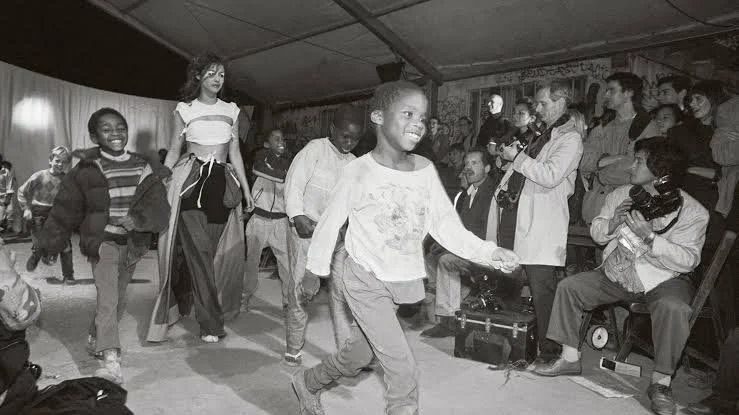
The next show was held at a children’s playground, with the local kids creating the invitations and sitting in the front row (much to the influential editors & critics disapproval). Future shows were held at disused hospitals, abandoned train stations and vacant lots, with invitations being infused with everyday objects; a Rubik’s cube, ceramic dinner plate and even a classified newspaper ad. Some shows didn’t feature models at all, either being shown on marionettes or held up on hangers like an auction.
Honourable mention of the 1996 ‘Topless Tabi’ a pair of shoes that were only the sole, requiring tape to strap the shoes on. This works against the idea that luxury fashion is supposed to be perfect, a garment to wear with no work from the buyer. If you want to wear the shoes, you need to tape them on.
SS90
Anonymity
This idea of anonymity forms a deep cornerstone of the Margiela brand. The clothing featured a white label fixed with four white tacks, meaning you could easily cut the tag out if you wanted a purely unbranded garment. Instead of a brand name, the label featured a set of numbers from 0 to 23, with the circled number used to identify the category or collection the garment came from. For example, 22 is for footwear, 3 is for fragrance and 20 is for garments made between 2009 and 2014 (this will make sense later). Even the brick-and-mortar stores were not in any phone directories and outwardly labelled with the brand name.
If you remember from earlier in the article, Maison Margiela used to be called Maison Martin Margiela, only dropping the ‘Martin’ in 2015. Margiela was (and still technically is) an eponymous brand - Martin Margiela being the original designer. But who was Martin?
Unlike most luxury brands, where the original designer becomes a celebrity in their own right, Martin Margiela kept away from the spotlight. Throughout his tenure as a designer and especially after the 1980s, Martin never undertook an in-person interview, never posed for photos and never bowed at the end of his shows. In any interviews the brand accepted, they were always via fax or email, with the pronoun ‘we’ being used instead of ‘I’. The idea behind this is that, A: the clothing does the talking, you’re not here to know Martin, you’re here to know his craft. And B: Margiela is made up of a wide team of designers, they’re a collective, and should all be represented equally.
I could go into Martin’s history (what is known at the very least), but I don’t think that fits. The brand is not about him, it’s not about going into a deep dive to figure out what makes the man behind the white label, so I want to respect that.
In 2009, Martin retired from the brand. It was a subtle and unannounced retirement, with the brand being run by the collective until John Galliano was appointed the new creative director in 2014. It was at this point that the ‘Martin’ was dropped from the brand name, to represent the new phase of the brand’s life. Ten years later, Glenn Martens took over from Galliano.
SS96
Deconstruction
One cannot understand the fashion industry today without acknowledging Margiela. In addition, their idea of deconstruction and repurposing of everyday objects has bled into the mainstream luxury fashion industry. It was on the fringe of fashion in the early 1990s and paved the way for designers afterwards. Margiela has been a major inspiration for Alexander McQueen, Nicholas Ghesquiere, Raf Simons and Demna Gvasalia.
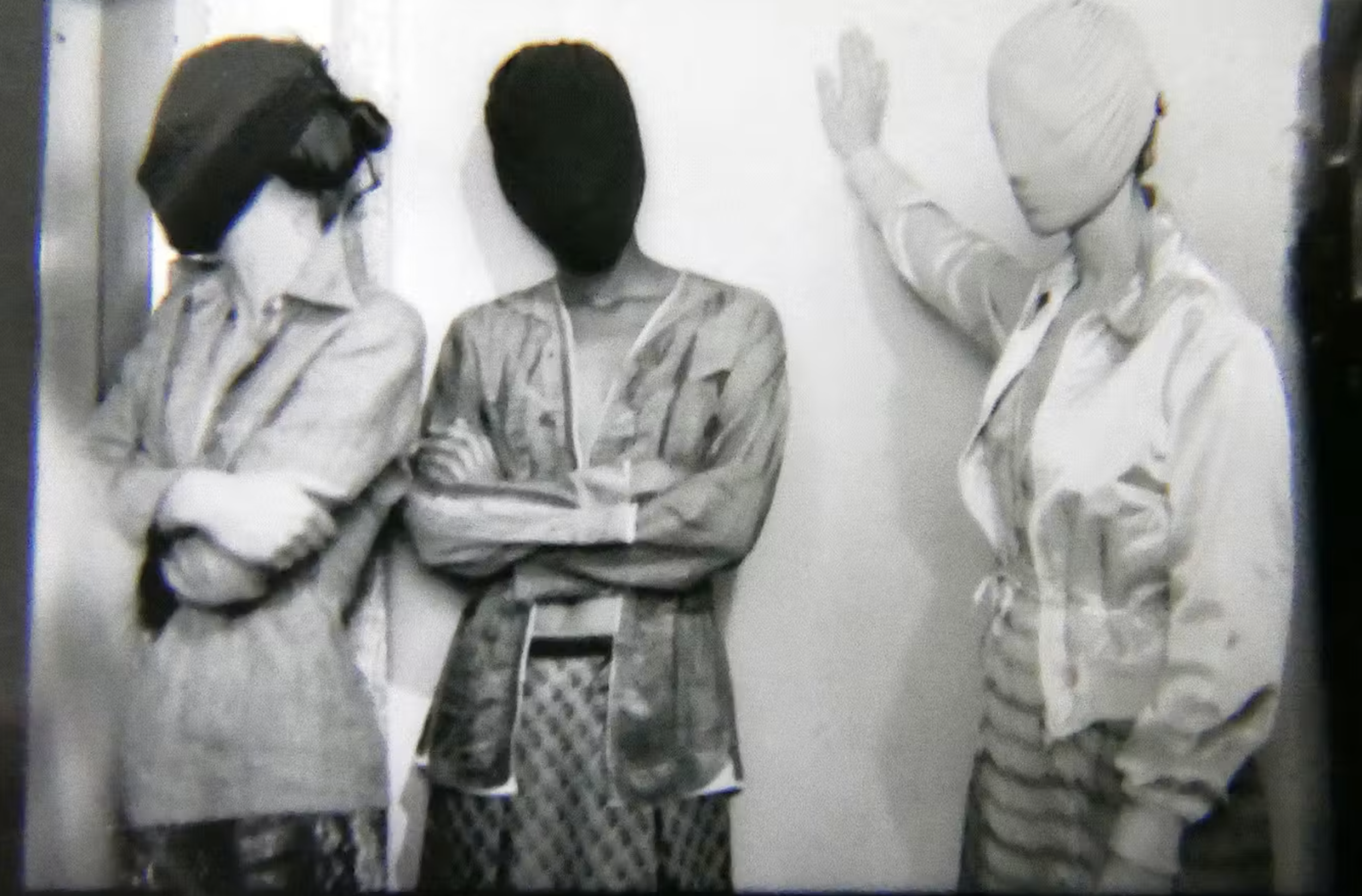
They would deconstruct every materials and rework them, creating scarves and coats made from wigs and tops made from stitched together leather gloves. Even the raw stitching and undone hems was a celebration of imperfection and the process of garment making. This idea of sustainability (which was unheard of in luxury fashion at the time) is now flooding the runways of today.
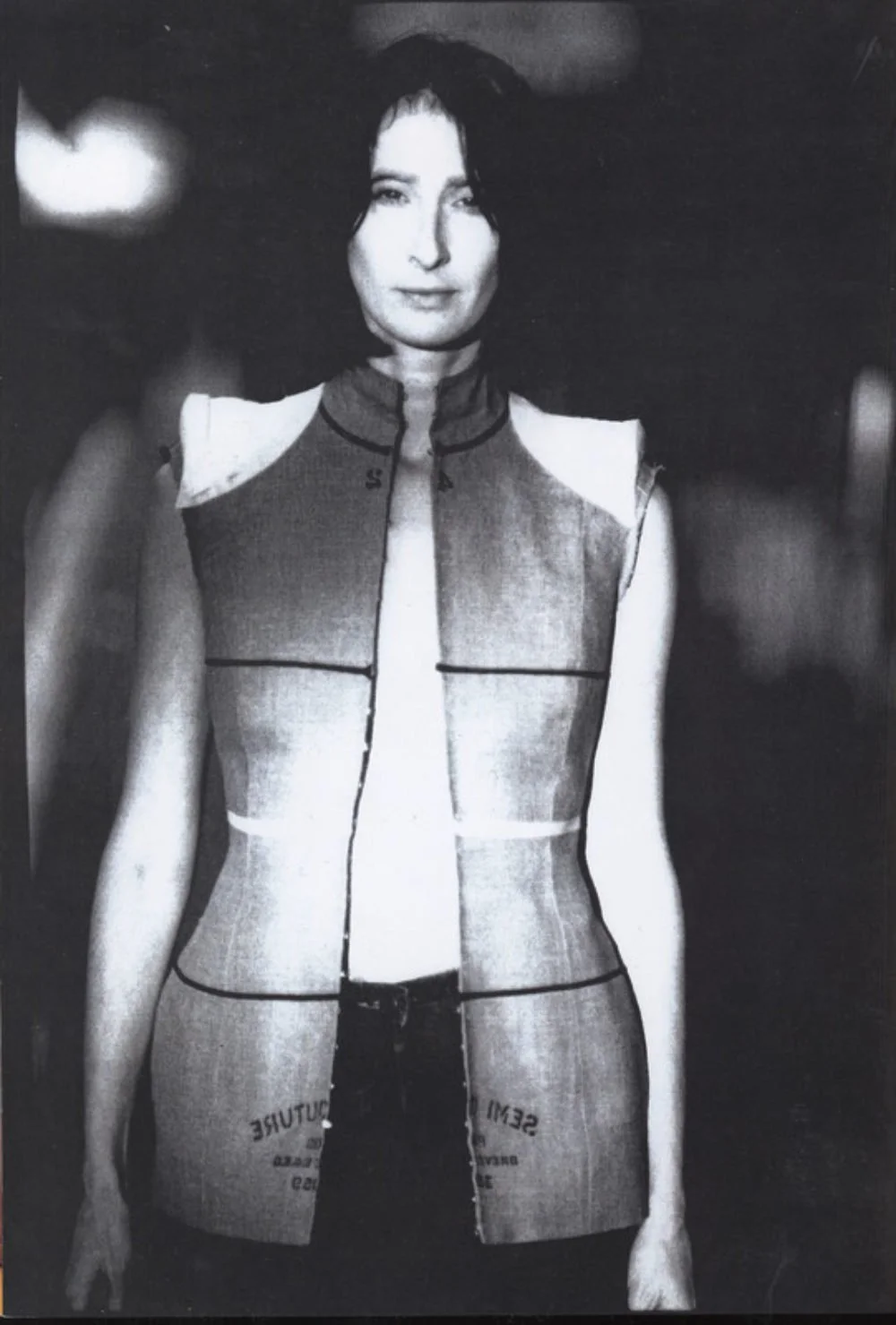
SS97
Versatility
For the Spring Summer 2000 collection, Margiela pioneered the oversized look by creating a collection in IT size 78, which is a US size XXXXL. This was unimaginable at the time, as the standard in the 90s and 00s was an incredibly slim model and silhouette. Turns out that there was a collector of these oversized pieces, not to preserve history, but because they were clothing that actually fit him. But the idea of playing with proportions is throughout the fashion industry today, something that Margiela helped create 25 years earlier.
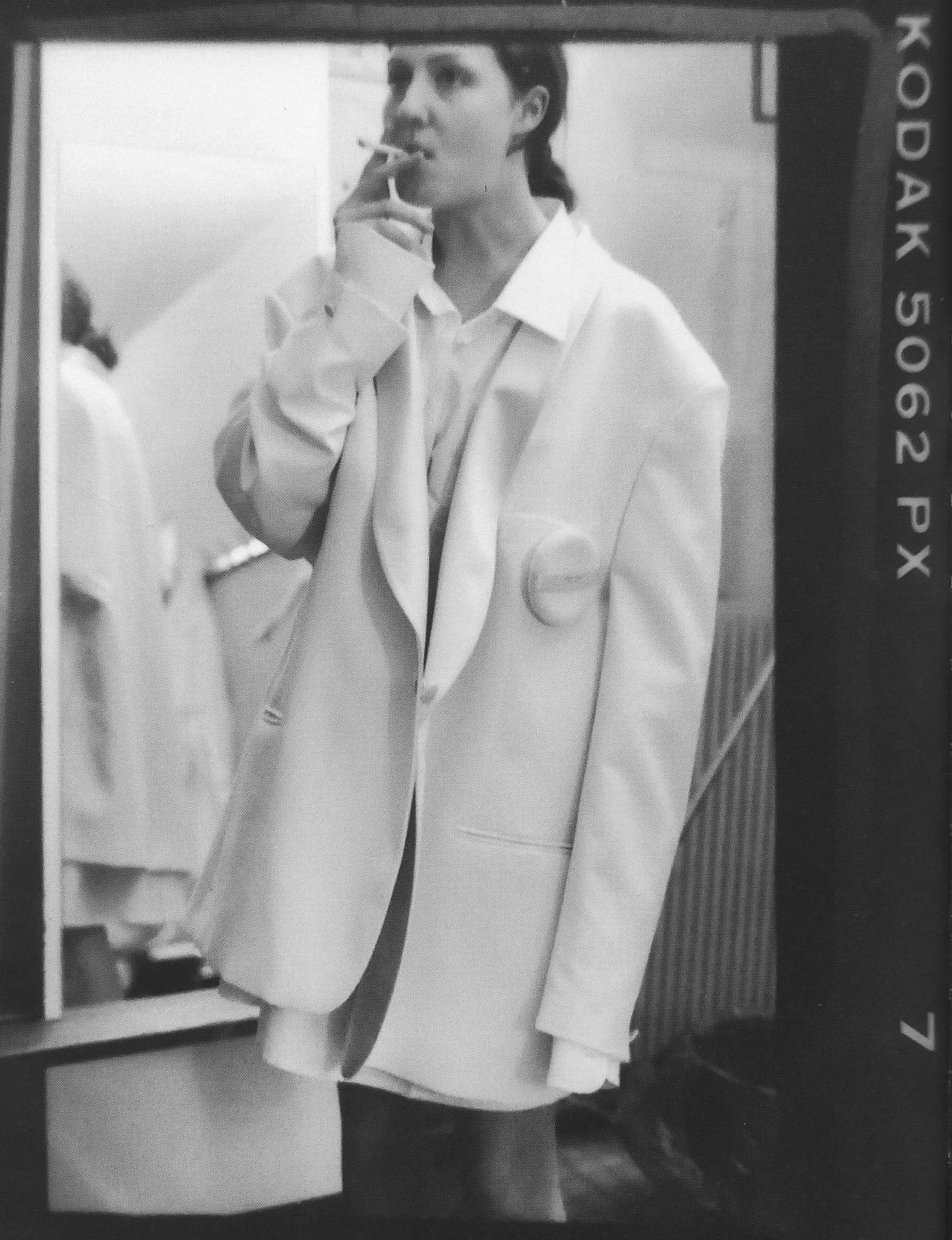
SS00
Margiela is your favourite designer’s favourite designer. Margiela broke the rules and rewrote them. They were anti-fashion not in an outward protest, but in a quiet reflection of what can be considered fashion in an industry that was so luxuriously cookie-cutter. It wasn’t luxury in the traditional sense, it was a combination of fashion and art, complete and utter respect for the garment. Margiela didn’t rely on celebrity, didn’t rely on supermodels and didn’t rely on fancy tactics. It was all about the clothing and nothing more than that.
Not much is known about Martin’s retirement in 2009. In the 2019 documentary Martin Margiela: In His Own Words (where only his voice and hands are shown) he states “At the end, I became, in a way, artistic director in my own company. And that bothered me.” When honoured at the 2018 Belgian Fashion Awards, he issued a statement saying “I felt that I could not cope any more with the worldwide increasing pressure and the overgrowing demands of the trade. I also regretted the overdose of information carried by social media, destroying the ‘thrill of wait’ and cancelling every effect of surprise, which is so fundamental for me.”
Margiela started as a brand on the fringe of luxury fashion. It was both welcomed and rejected, depending on who you asked at the time of its debut. What was groundbreaking at the time, is now commercialised and standard. The Tabi boots themselves were created after being rejected by multiple cobblers for being too daring - now they’re plastered on the Instagram and Tiktok pages of various influencers. What started as a cult following of collectors has turned into a mainstream set of buyers looking for niche status symbol. Martin himself was correct back in 2009, he accurately predicted the future of fashion in a sense. The growing demands and commercialisation of fashion, the complete dissemination of brands across social media is taking hold.
It’s difficult for a brand like Margiela (as it originally was) to exist in today’s world. That’s why Galliano took over and shifted the brand into a more commercial direction. The brand now has social media and branded stores all across the world. Maybe the reason why it was so successful back in the day was because of the world it existed in. It’s interesting to see how the brand DNA infuses with today’s world.
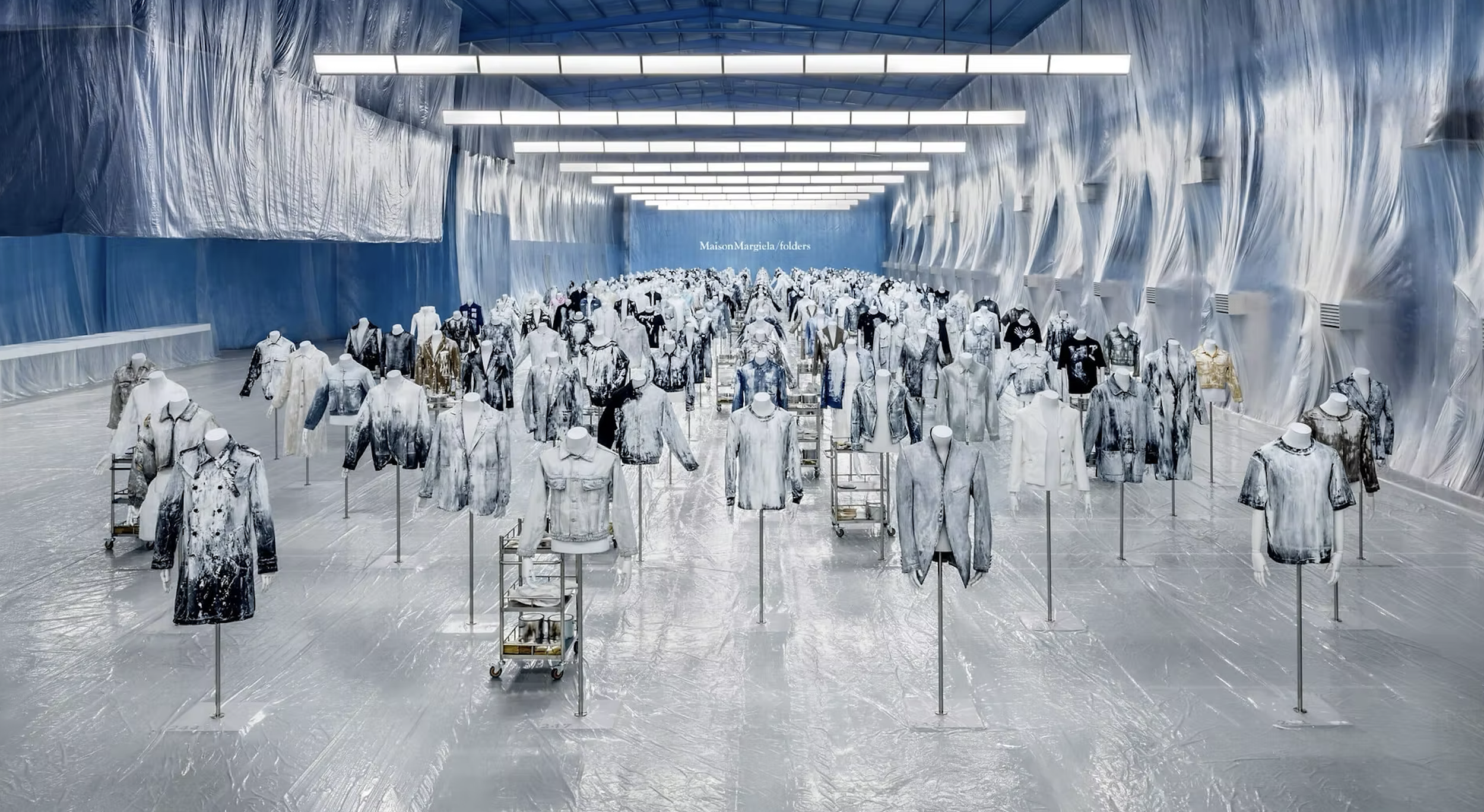
There’s something interesting about the colour white. Margiela loves the colour white. Their headquarters are entirely covered in a white emulsion, used both for its matte finish and the fact that it was impossible to clean. Every scuff, mark and everyday wear and tear tells a story, and cannot be removed. Throughout their brand history, Margiela demonstrates the passage of time, either through deconstruction, repurposing of everyday materials, usage of derelict runway venues and the use of the colour white. It’s a love letter to everyday life and lifetimes.
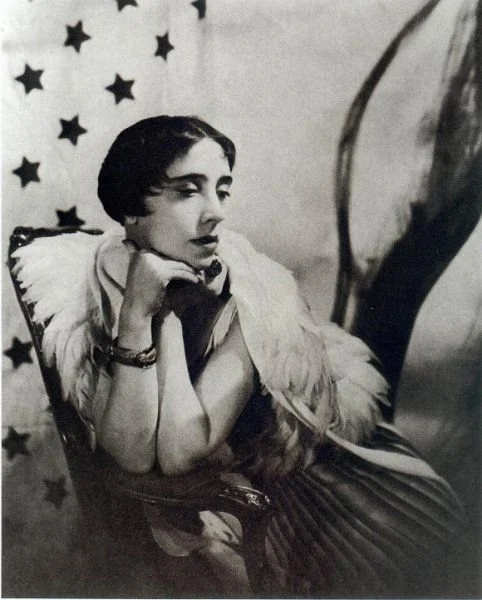
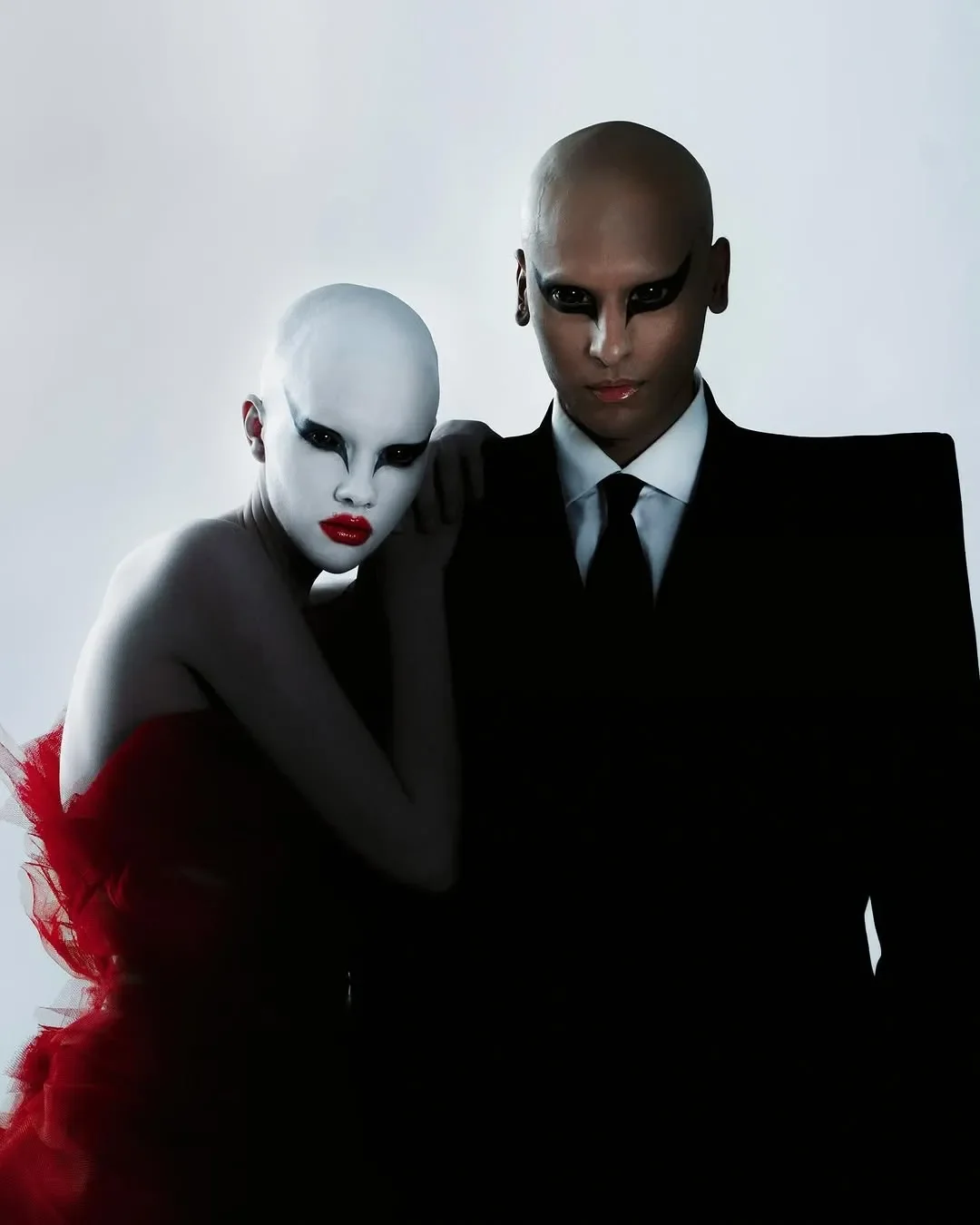
Margiela is your favourite designer’s favourite designer. Margiela broke the rules and rewrote them. They were anti-fashion not in an outward protest, but in a quiet reflection of what can be considered fashion in an industry that was so luxuriously cookie-cutter.