
Post-Human Fabrication - Matières Fécales
At the New York premiere of the Odyssey, Zendaya wore an ivory gown with feathered wings and a tattered train. Styled by Law Roach, Roach asked the brand to keep the gown in the archives for this moment, only being seen on the original runway before this moment. The look was angelic and unique, spreading across social media and various fashion magazines. The look was created by a brand called Matières Fécales - translated from French to Fecal Matter.
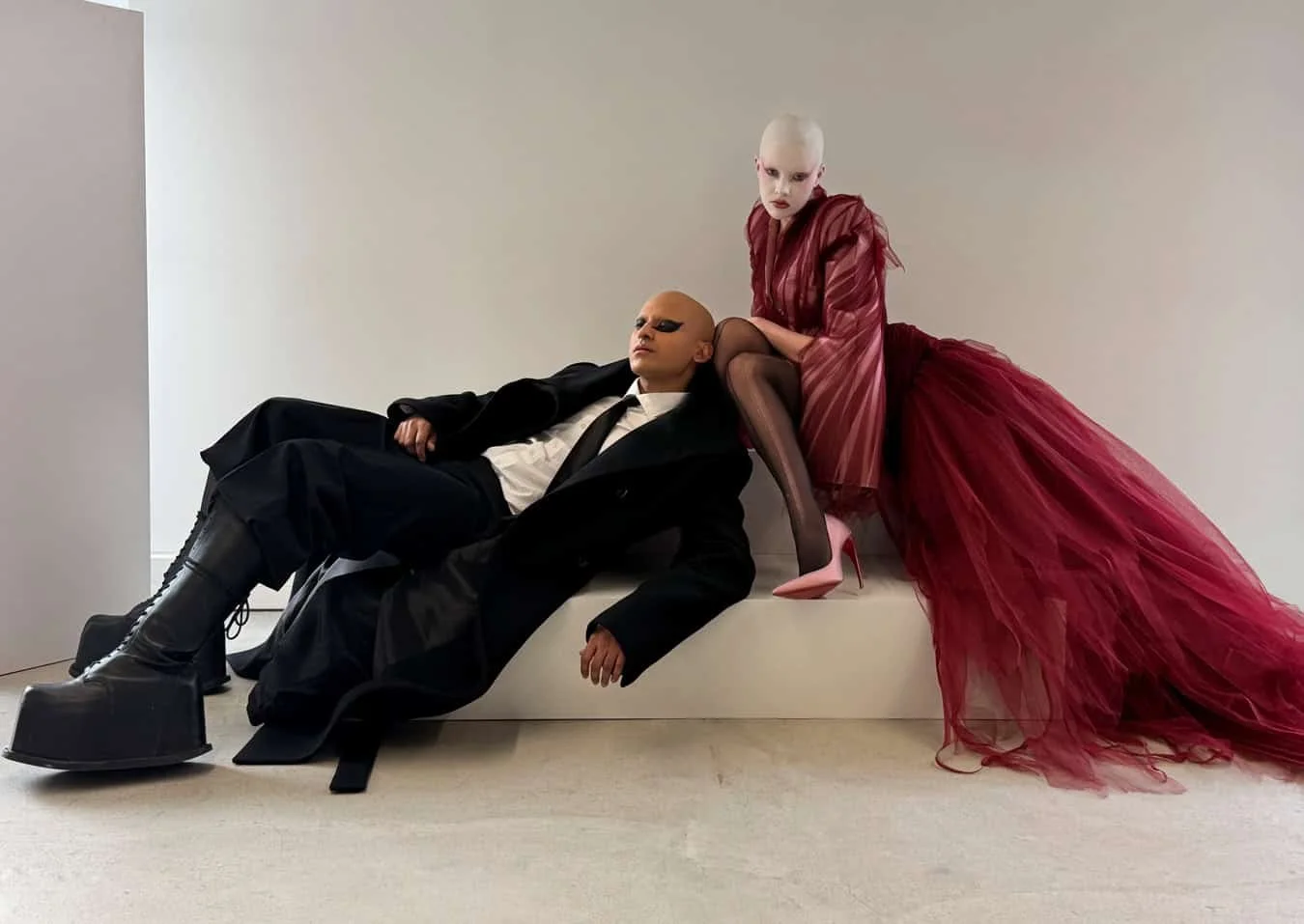
Matières Fécales is the collaborative label of Hannah Rose Dalton and Steven Raj Bhaskaran. It pushes the boundaries of fashion, creativity and the human form. Starting from a social media presence and Depop store to the runway of Paris Fashion Week and shelves of Dover Street Market, Matières Fécales is one of the most unique fashion brands I’ve seen in a while. Tradition meets post-humanity, fabric meets commentary.
Dalton grew up in one of the wealthiest neighbourhoods in Montreal, attending a private all-girls school and eventually LaSalle College. After the collapse of the Rana Plaza Factory in Bangladesh killed over one thousand garment workers in 2013, Dalton taught herself to make her own clothing a protest against the “non-glamorous side of fashion”. Bhaskaran, was brought up in Cartierville, one of the poorest neighbourhoods in Montreal, experimented with his own fashion and gender while studying at LaSalle College.
After facing deeply different environments throughout their childhoods, Dalton and Bhaskaran met at (you guessed it) LaSalle College while studying fashion design, sparking a friendship that turned into a romantic relationship. These different interactions with money, resources, race and privilege would shape their creative pursuits going forward. In 2016, the couple created Fecal Matter, a project focusing on the excessive nature of fashion and the creative ambition behind it. They shared the same hatred for the restrictive fashion industry and the same pursuit to dismantle it. From there, it was rebranded to Matières Fécales (Fecal Matter, but in French), their official clothing brand in 2025.
Now, the first impression. Fecal Matter as a brand name. It’s inherently disgusting and uncomfortable, antithetical to what a luxury fashion brand should be. The fact that luxury fashion is the pride of France, with many powerhouses According to the founders, the concept was duality. Stated by Bhaskaran to Another Magazine, “To make that work; the clothes have to be well made - that’s the only way a name like ours makes sense in a luxury space.”
Using recycled materials, Matières Fécales sold their clothing on sites like Depop and Instagram, slowly building a following of those who were devoted to their ‘unusual, goth and avant-garde’ aesthetic.
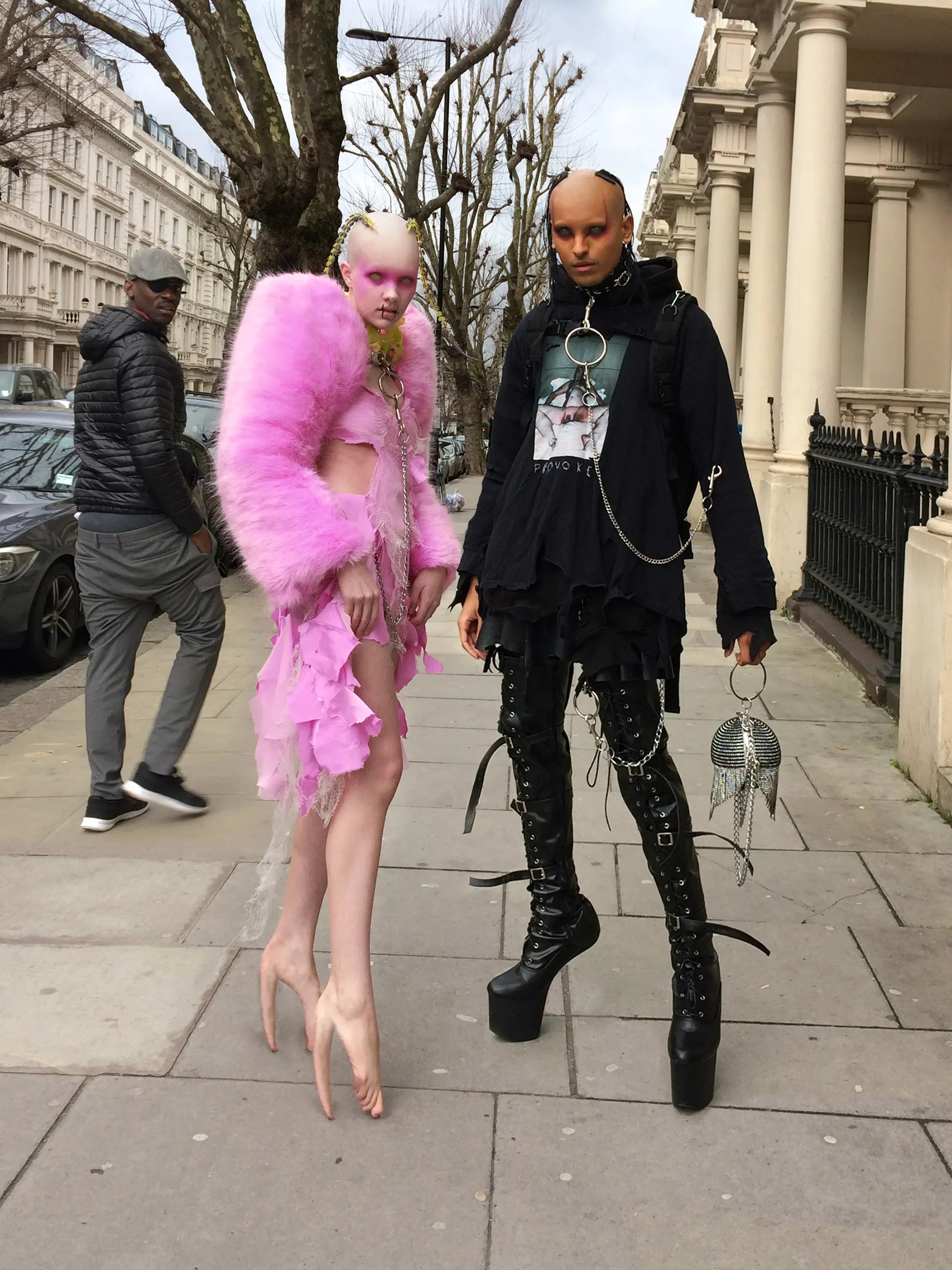
As individuals, Dalton and Bhaskaran fully embraced their own aesthetic that was reflected in their brand. Shaved heads, shaved eyebrows and white ‘alien-esque’ makeup accessorised alternative clothing and (at the early stages) photoshopped body parts and silhouettes into post-human figures. (Eventually these edited body parts became real life accessories, creating the Skin heel boots with artist Sarah Sitkin.)
Matières Fécales slowly bubbled up to the mainstream luxury fashion world through collaborations with established fashion houses - Rick Owens, Balenciaga, McQueen and Louboutin. In 2024, they began working with Selfridges and Dover Street Market, creating small collections for sale.
Matières Fécales created the prosthetic makeup for Rick Owens’ FW 2019 show, cementing their relationship with the brand for years to come.
In 2025, Matières Fécales was recognised by the Fédération de la Haute Couture et de la Mode, allowing them to show at Paris Fashion Week and be recognised as a haute couture brand.
They debuted at Paris Fashion Week in 2025 with their Fall/Winter 25 collection, named “The Other”. Deconstructed tailoring, spiritual elements and unconventional silhouettes grace the runway, supplemented by unusual footwear created by Christian Louboutin. Their first runway at PFW was actually shown twice, back-to-back, to compensate for the major turnout of fans and curious attendees alike, a rare move for such a luxurious event.
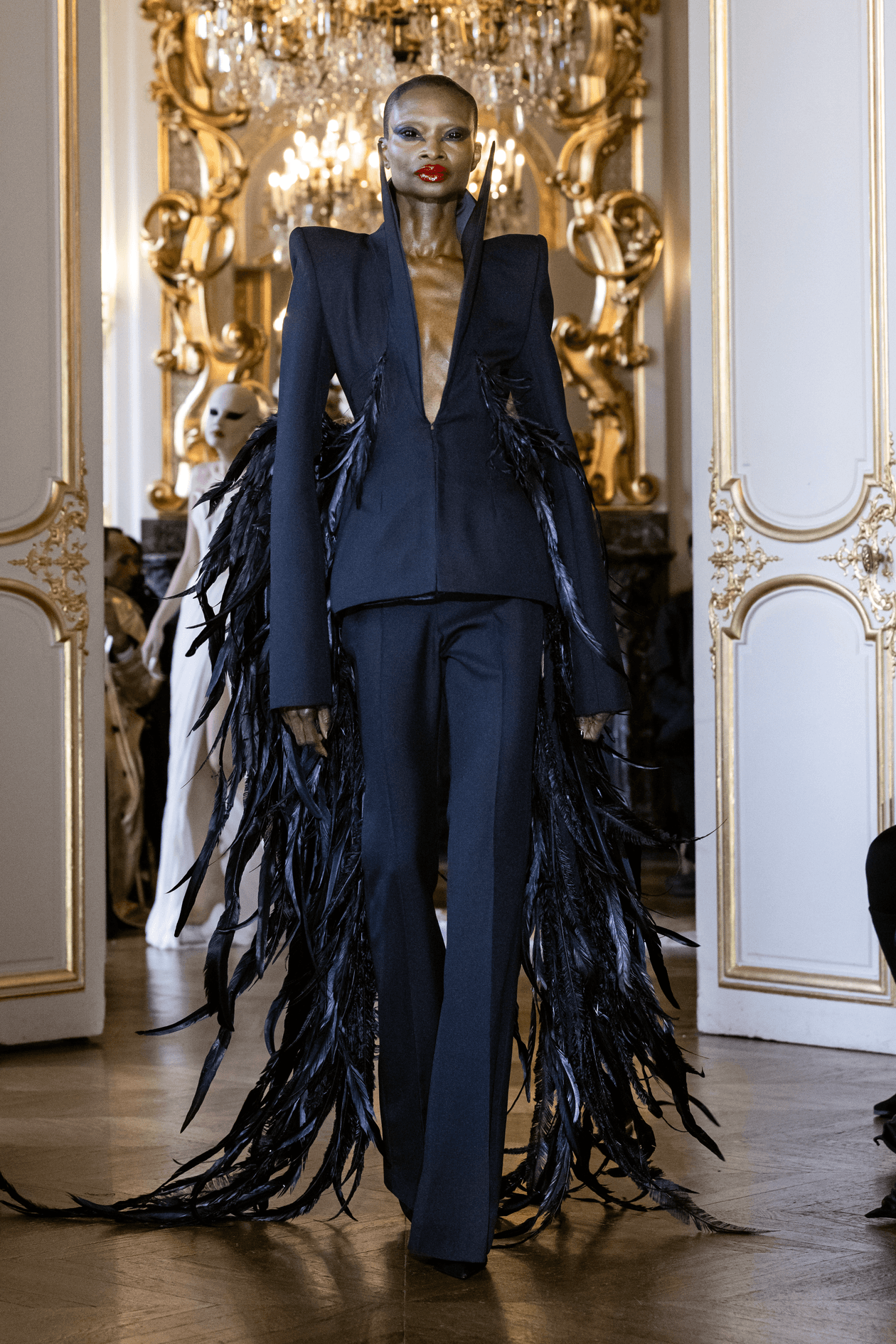
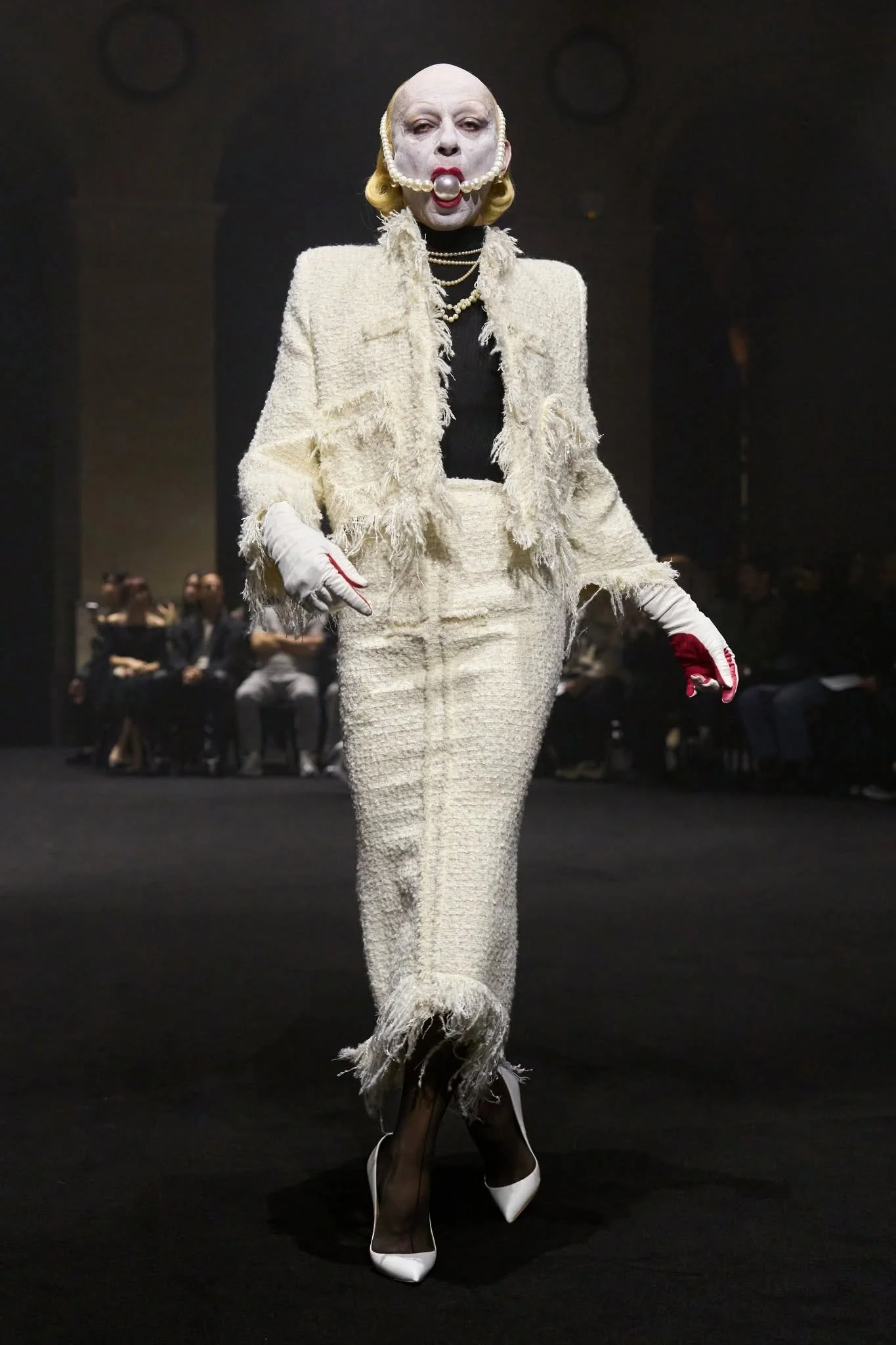
Matières Fécales succeeds by eroding traditional beauty standards. The codes of dress - suiting, formal gowns, luxury - are reimagined in tattered tulle and deconstructed tweed.
“We’re nobodies. We don’t come from Central Saint Martins and that whole trajectory. We didn’t work for any big brands. We don’t have the resume.”
Their most recent collection, FW26 is called ‘The One Percent’ designed to poke fun and create commentary about the richest of the rich. Held in the Palais Brongniart (Napoleon’s former stock exchange), prosthetics were used to recreated botched and artificial plastic surgery (a lá Mar a lago face), dollar bills became blindfolds and white lambskin gloves were tinted in blood-like paint - the blood on the rich’s hands. The garments were refined, but held signs of decay, wear and restriction - a ‘fecalised’ version of Dior’s New Look.
Their garments have been worn by Lady Gaga, Sarah Paulson, TKA Twigs and Demi Moore, for events like the Grammys, Oscars and the Met Gala. That’s a major step after a mainstream debut only last year.
Matières Fécales is a shock to the system, and its supposed to be. They push the limits of what’s socially acceptable. It’ll take a brand like this to break down the traditions of a luxury fashion behemoth pumping out frankly uninspiring clothing, still relying on the creative ambition of those designers that once designed for them. Their runways are independent and diverse, breaking the mould of traditional modelling and introducing their friends, muses, found family and even themselves as models.
The fashion industry has consistently been pushed forward by designers like McQueen and Galliano, and I believe that Matières Fécales is another instance of this. And I believe that Matières Fécales is now so successful because the fatiguing industry needs a brand like this, a brand willing to break past the trends and secure its own identity.
In addition, in the world of AI, excessive plastic surgery and intensive health focus, where the definition of ‘human’ is shifting, Matières Fécales plays with this by subverting the human form and providing commentary on these trends. They’re human, but not quite - post-human but referencing the aesthetics we’re seeing today.
“A lot of the major players in fashion are too concerned with pleasing everyone that their proposals are structured in the same way as fast-food restaurant menus. It’s all cash cows and greatest hits.”