
Ametora - Japanese Americana
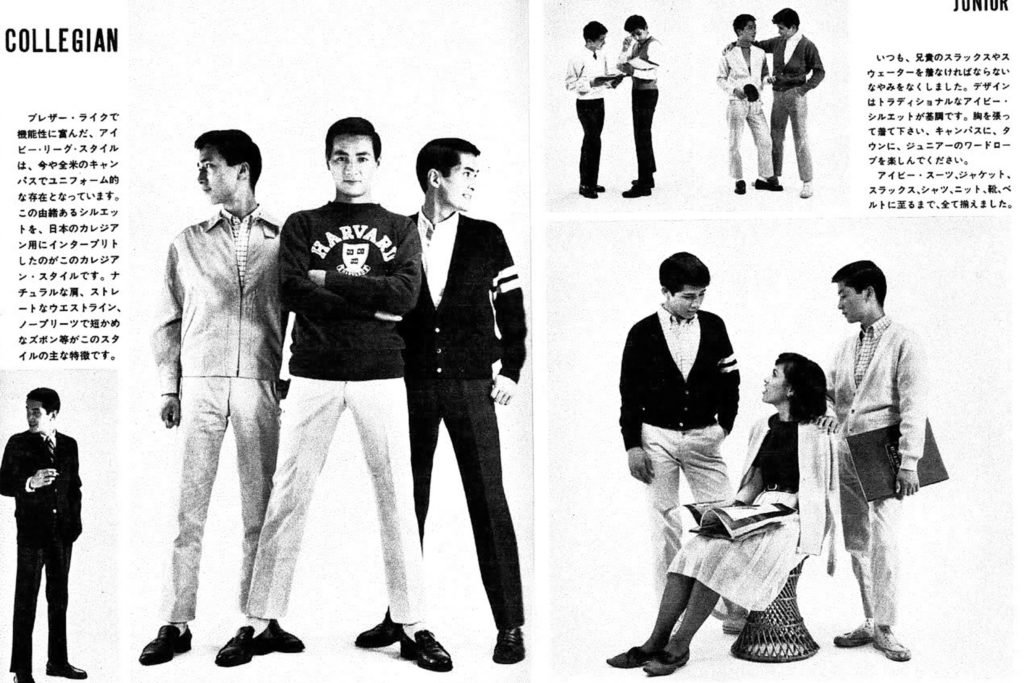
Our final instalment of our Japanese Subcultures - Fabrication of Life series, and perhaps one of the most widespread and foundational aspects of Japanese fashion. It was directly inspired by the Western world, but it is fundamentally Japanese - AMETORA (short for American Traditional).
Now, when I came up with starting this series, I thought Ametora would be like all the other subcultures I’ve written about so far. Pretty easy, pretty standard. Origin, popularity, legacy - done. But, it turns out that Ametora is far more detailed than that. More like spanning over hundreds of years rather than just a few decades.
Before I get started, I would just like to shout out Ametora - How Japan Saved American Style by W. David Marx, which I used for the foundation of this article. It’s incredibly well written and goes through each facet of the Ametora trend - definitely worth a read.
Ametora is essentially Japan reverse-engineering American style, creating heritage fashion before it even became a marketing term.
So, How did it all begin?
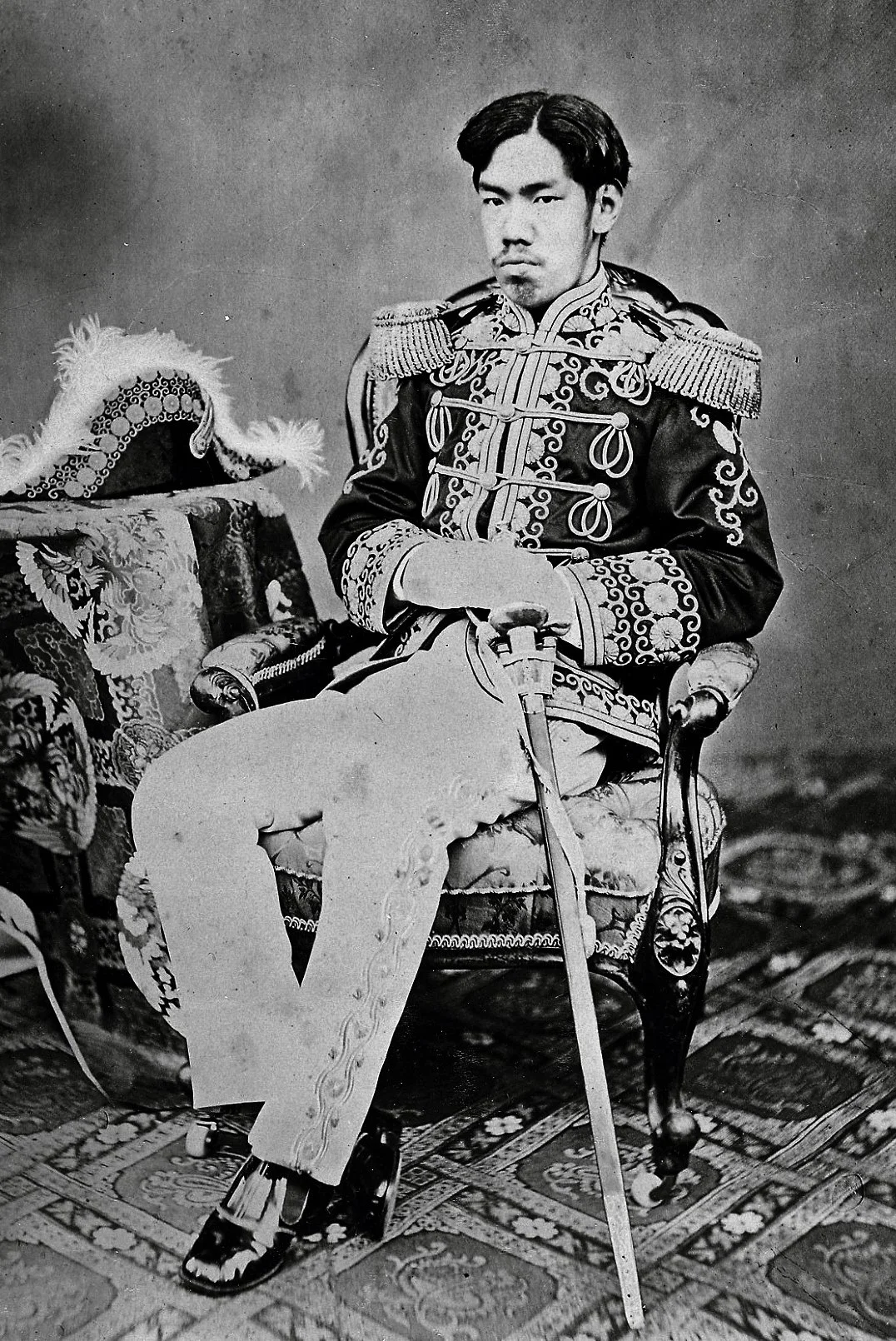
Emperor Meiji, 1873
In order to understand how Ametora came to be, we need to go back to the way things were. The Meiji era was a vastly transformative time for Japan, moving from a traditional feudal society to a fully-fledged nation. During the Meiji era, Japan was undertaking ‘Western modernisation’, as the government brought Western influences to the everyday lives of the Japanese public. This was done to bolster Japanese society against the risk of American and European colonisation.
In 1870, Emperor Meiji cut his hair into a Western style and wore a European-style military uniform, instructing all military members to do the same. From there, this trickled down through society, with other government officials (policemen, bureaucrats, train conductors etc.) donning Western or Western-inspired clothing. In 1886, university students were required to wear black gakuran, square-collared jackets and matching pants, which is still the typical male school uniform we know of today.
At the end of the Meiji era in 1912, Japan was in an interesting position. In the 1920s, groups of men and women (known as mobo and moga - ‘modern boys’ and ‘modern girls’) flocked to Ginza, wearing short bobs, slicked back hair, silk dresses and wide legged suits.
One Man’s Fascination
One of these mobos was Kensuke Ishizu. As a university student in the early 1930s, Ishizu rejected his traditional gakuran uniform for a tweed three-piece suit and a pair of saddle shoes. He loved sartorial flair, especially Western-inspired dress. In 1939, Ishizu and his family moved to Tianjin, China - a hub of Chinese, Japanese, British and Russian culture. He began working at a department store, and soon took over clothing manufacture and design, with a focus on suiting.
When Japan attacked Pearl Harbour in December 1941, the regional conflict in Japan instantly grew to an international conflict with the United States and Allied Forces across East Asia. Japan rolled back all Western influences, publishing propaganda against the “devilish Anglo-Americans” and removing all English words from brand and product names. Food became scarce, fabric was rationed and all sense of safety was torn away by regular American air bombing campaigns. In September 1945, when Japan surrendered after the atomic bombings of Hiroshima and Nagasaki just a month earlier, Japan and the surrounding countries became flooded with and occupied by the US military in October.
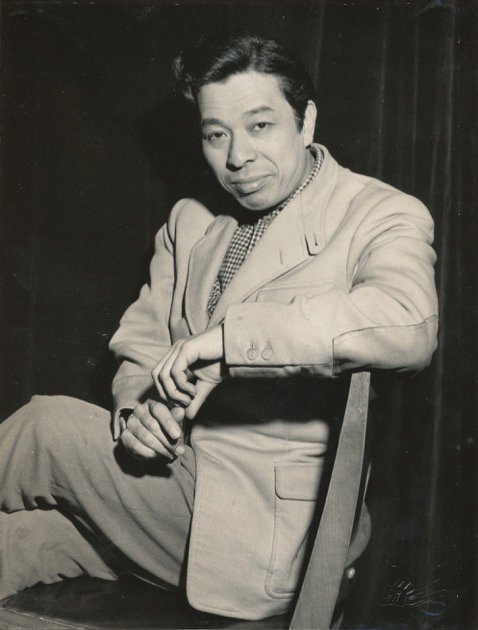
Kensuke Ishizu
Due to his ability to speak both Japanese and English, Ishizu became close to the US soldiers stationed in Tianjin. He met a Lieutenant named O’Brien, who shared his undergraduate life at Princeton University and his involvement in the ‘Ivy League’ (remember this, it’ll come up again later).
In 1946, Ishizu returned back to his hometown of Okayama, finding it levelled to the ground from the air bomb attacks. Food shortages were still in full effect and many Japanese sold the clothing off their backs to afford food. The US stopped all clothing exports to Japan and the ability to buy or even make new clothing was incredibly rare.
Little America, Tokyo
The US soldiers occupying Japan, Tokyo especially, created pockets of American society, with Ginza being known as ‘Little America’. Slowly, American middle-class life was shown to the Japanese public, through music, comics and Japanese-English translation guides. The Americans occupying Japan were not held back by the shortages and scarcities that the Japanese were facing, and the material comfort they were living in became aspirational to the Japanese - it looked like a golden ticket out of despair.
Back to Ishizu, he spent his time back in Japan working for an undergarment factory known as Renown. He built up a network of tailors and stockpiles of fabric, most from ‘Little America’. In 1951, he started his own brand called Ishizu Store, with a focus on creating and selling Western style clothing. With the rise in American interest by the Japanese, Ishizu knew fashion was the next to shift. And with his history in Tianjin, Western connections and personal interest in Western clothing, Ishizu knew he was the best man for the job.
Sovereignty was returned to Japan in 1951, and the US soldiers slowly left Japanese soil. The post-war boom was finally starting, and the Japanese public wanted to throw out their wartime clothing for a new wardrobe, which was becoming more Westernised. Ishizu created his own brand named ‘VAN’, creating suiting, jackets and saddle shoes for white collar men and the upper classes. The ready-to-wear nature of the business was antithetical to the industry at the time, as tailor-made clothing was the standard. And, the majority of clothing bought by Japanese men at the time were standard, bland and professional, apparently with white shirts outnumbering coloured ones by 20 to 1.
In the early 1950s, there were only a few fashion magazines, mainly directed towards women. At the time, Japanese women were following global trends, and their husbands were getting left behind - only wearing the same business suit for every occasion. In 1954, the magazine Men’s Clothing (Otoko no Fukushoku) debuted, with Ishizu joining the editorial team. It was less of a magazine and more like textbook, instructions of what to wear when and how to wear it. Ishizu incorporated VAN into the magazine, as well as moulding men’s views on and interest in fashion.
Ivy Style
Apparel consumption grew further in the post-war period, and Japanese clothing companies (including VAN) grew tenfold. Remembering being told about the ‘Ivy League’ by Leiutenant O’Brien some 4 years earlier, Ishizu decided to travel to the US for a month in 1959 to research American fashion. He visited Princeton University and saw that Ivy League students dressed in a very distinct way; wool blazers, button up shirts and straight leg trousers. Ishizu snapped a few photos and decided that he would pivot his VAN brand to start producing Ivy style clothing (eventually creating Take Ivy, a book documenting this style).
There was just a small problem though, three actually.
One - the Japanese public were completely unfamiliar with the Ivy style and were very apprehensive to adopt it into their wardrobes.
Two - Japanese tailors and manufacturers had no clue how to make Ivy style clothing.
And finally, three - Japanese retailers weren’t interested either, as they thought it would never sell.
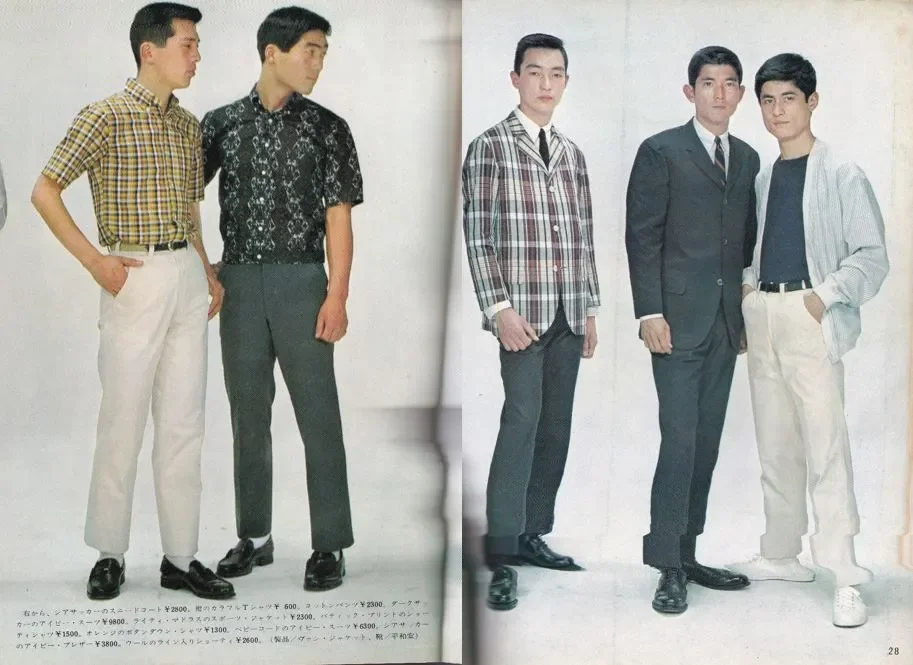
Ivy Style in Men’s Club - 1964
However, the integration of Men’s Club (the rebrand of Men’s Clothing) and VAN’s Ivy range eventually started to solve these problems. Retailers began to place orders for the new Ivy looks, and Men’s Club readers began following the Ivy style to a T. The writers at Men’s Club were effectively the ‘architects’ of Ivy, creating rules and protocols like having your necktie 7cm wide and wearing a pocket square in the ‘Ivy Fold’. The nature of Japanese culture is to follow traditions and disciplines, and especially with something completely new to Japanese fashion, rules were essentially necessary to ensure adoption. And adoption started.
Although, in the rules of Japanese society, any new style adopted by Japanese youth (especially something non-traditional) was viewed as delinquency. In some cases that was true, as many young gang members or ‘deviant kids’ (who loitered around cities like Ginza) wore Ivy, but others just loved the style. Apparently Ishizu received calls from concerned parents stating that their children were spending too much of their allowance on VAN, and the police thought he was actively inspiring teenagers to ‘lose their way’. In 1965, the Tsukiji Police organised a meeting for the Chuo Ward Committee on Juvenile Problems, with a speech by Kensuke Ishizu himself. Two thousand teenagers and young adults attended to hear the ‘godfather of Ivy’ speak:
“Ivy is not a momentary trend that you follow, but a tradition to be honoured, passed down from your father and grandfather. It’s not just clothing, but a way of life. So you can’t just hang around town like this. And if you understand what I’m saying, you’ll tell your friends as well.”
A few days later, the Ivy loiterers around Ginza disappeared and Ishizu was praised for ending the youth crisis. (Technically the school holidays just ended at the same time and those kids went back to school, but the police believed Ishizu had the power to sway the young generations.) Eventually, the westernised style of Ivy moved past the topic of youth delinquency and surprisingly, the police asked Ishizu to redesign their uniforms.
The 1964 Olympics in Tokyo dressed the Japanese team in red Ivy-style blazers, which further legitimised the Ivy look in Japan for all men, not just young ‘delinquent’ adults. The Emperor’s nephew at the time, Prince Tomohito, wore Ivy fashion in public appearances, even appearing in Men’s Club with the caption ‘Imperial Ivy’. VAN reached ¥1.2 billion in sales in 1964, which is $10 million AUD today, a 25-fold increase in sales and growing to a team of one thousand across Tokyo and Osaka, all in a decade.
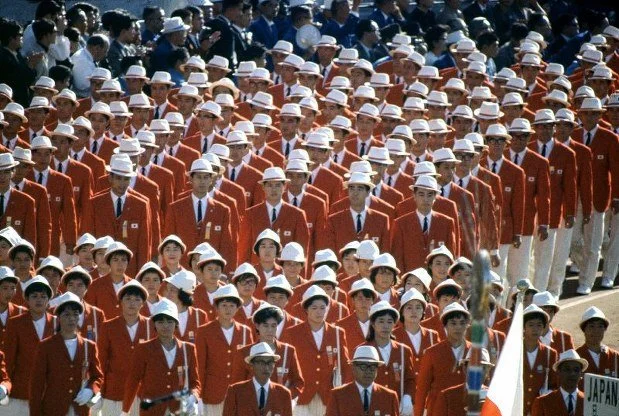
The Japan Team for the 1964 Olympics
VAN was the first Japanese fashion brand to endorse athletes and racing drivers. VAN Snack opened as a restaurant in Ginza. VAN Music Break was a weekly music show on Sunday, showcasing musicians performing in their Ivy outfits. Coca-Cola became an ally of VAN, even using a previous VAN commercial as the look for their own commercial in the 1970s.
VAN was now a staple in Japanese fashion, and furthermore, Western clothing was now a foundational part of the wardrobes of the newer generations. Ametora had begun, and it was here to stay.
501s & The Vintage Silk Road
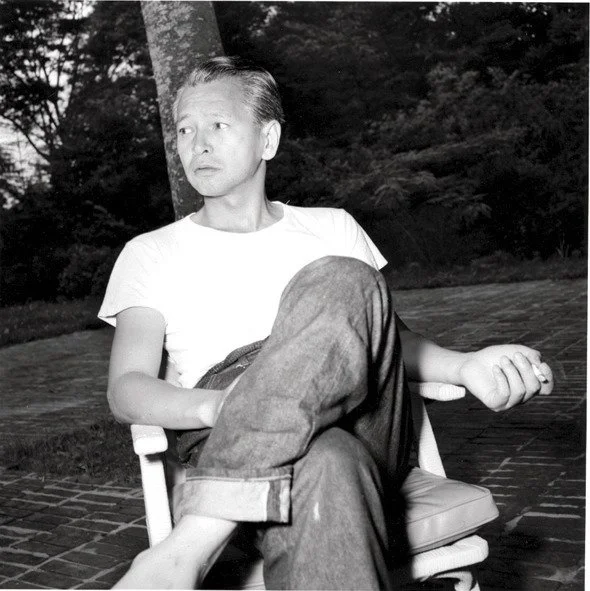
Jiro Shirasu
Known as jiipan (G.I. pants) until the 1950s, jeans were primarily seen on American troops on and off base. They were sold on the black market, and were always second-hand. The idea of brand new pair of jeans was unheard of until one man took a flight to San Francisco.
While in San Fransisco to sign a peace treaty with the US in 1951, bureaucrat Jiro Shirasu was photographed wearing a white t-shirt and a crisp pair of Levi’s 501s. After that, with the influx of James Dean and Marlon Brando films coming in from the US, the Japanese public were becoming familiar with denim.
In 1957, Japan relaxed it’s restrictions on international apparel imports. Retailer Eiko Shoji immediately flew to the US and purchased twenty thousand pairs of used jeans from Seattle, which was the first large-scale importation of jeans into Japan. From there, other retailers followed suit and soon, thousands of pairs of denim were imported into Japan each month.
The Japanese desire for genuine second-hand American clothing led to a number of vintage stores popping up across Tokyo and Japan overall. Many knew Levi’s 501s like the back of their hand and knew what to look for to identify its authenticity and the era it was made, like the use of selvedge denim, real leather patches and hidden rivets. Meaning, these rare authentic pairs could sell for a much higher markup than it’s American counterpart. There was demand and money to be made.
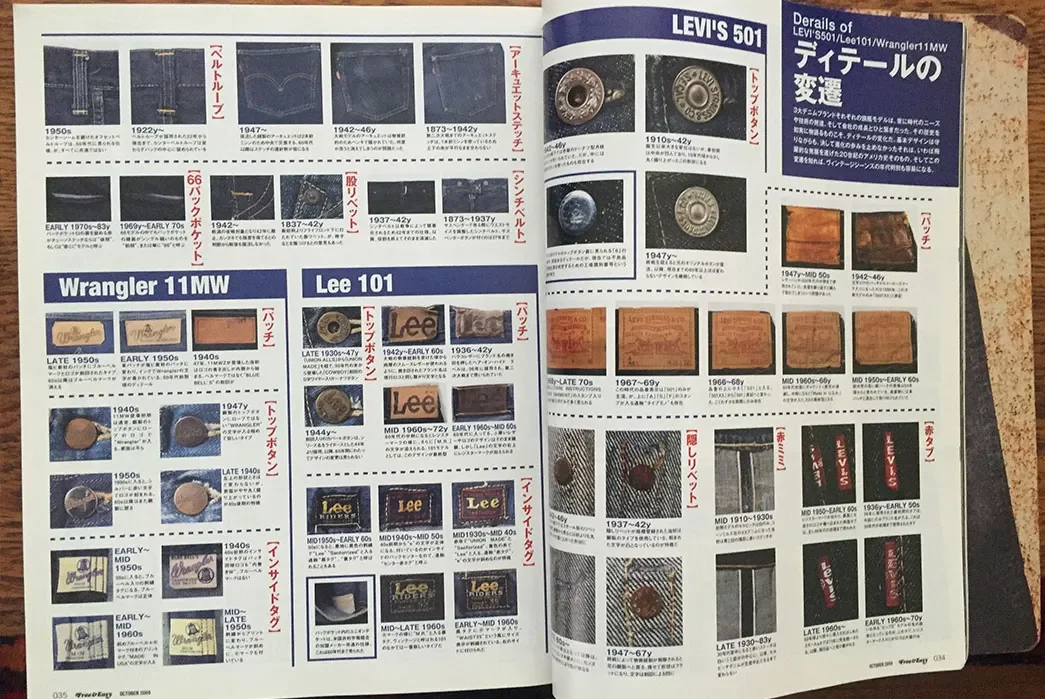
Denim details in Free & Easy magazine
“Before the Japanese got involved, you just identified 40s, 50s and 60s jeans as different, but not necessarily more or less valuable. They were all just ‘used jeans’”
A wave of Japanese and some American clothing hunters came through secondhand shops across the US. Slowly, the deadstock of America was bought and shipped back to Japan, under the guises of outfitting work crews and track teams to explain buying dozens of jeans & sneakers in various sizes. At it’s peak in 1996, Japan purchased ¥1.3 billion worth of secondhand clothing from America. Some Japanese brands even rented apartments in US cities for their buyers to drive around seven days a week and buy tons of clothing from stores and warehouses to ship back for sorting.
As the demand increased, so did the prices. Suddenly, normal teens couldn’t afford authentic US denim anymore, which created the market for authentic replicas, the same quality but a cheaper price.
So, Japanese brands, especially Maruo Clothing, wanted to see if they could make their own, more affordable versions of the American classics. The only problem was that they didn’t really know how to make them. The traditional Japanese method of indigo dying fully permeated the cotton fibres, which didn’t have the white core of American cotton that created the lighter shades of indigo/white after wear. After trial and error, the fabric didn’t come close, and there was no other option than to import denim from the US. One issue was solved, but then another one was created. The sewing machines in Japanese factories couldn’t pierce the thick fabric. And another issue on top of that, they needed the copper rivets, sturdy orange threads and steel zippers for the fly. To solve those issues, they imported the materials and the sewing machines, from the US. Meaning that the first pairs of denim jeans that were made in Japan, were purely from US imports.
But while retailers were apprehensive about these new jeans, the seed was planted for Japanese denim. Over time, brands like Fullcount, Warehouse, Studio D’artisan, Evisu and Denime became major players in the replication and innovation for Japanese denim, the 5 Osaka pioneers.
The Youth Movement
The 1960s was a turbulent time for both Japan and the world overall. The Vietnam War was causing major unrest within the world’s youth, causing protests starting in 1964. This, along with the rise of the Marxist student movement and the overall ‘hippie’ movement, created groups of disaffected young people, who wanted to distance themselves on the fringe of Japanese society. The blue jean was the unofficial uniform of these groups, who resisted against the Ivy aesthetic sold by VAN - essentially jeans were the antidote to Ivy style. Remember, Ivy was directly inspired by the US, and when the view of the US took a downturn as they increased their part in the Vietnam war, Ivy was seen as a reflection of that. (Technically blue jeans are one of the most iconic pieces of American clothing, but the message still stuck.)
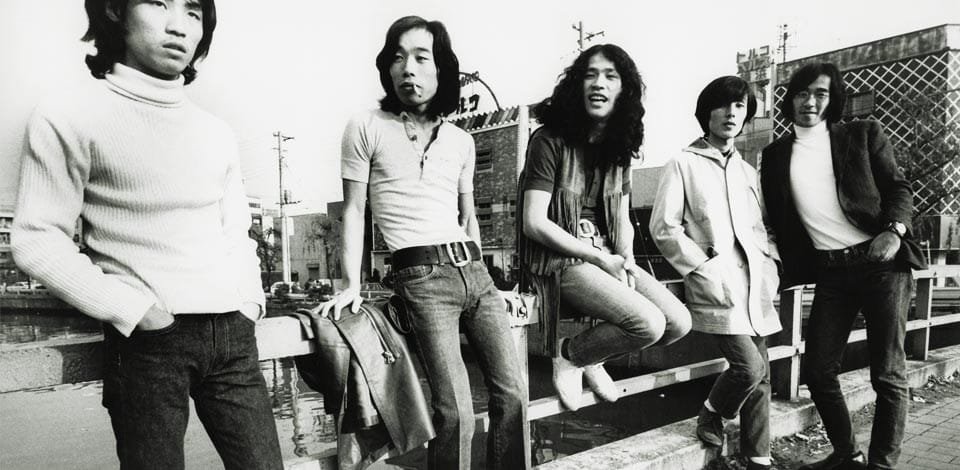
“When I started wearing Ivy, it was the clothes for the antiestablishment. But then America - the model for Ivy - went bad. I could no longer hide my disappointment.”
From there, the jeans business boomed. The 1970s were new heights, with forty five million pairs sold in 1973. But, another problem was arising. Even at this point, the denim fabric itself was still being made in the US. With labour strikes in the US south causing missed orders and President Nixon asking Japan to ‘slow down’ on the amount of fabric exported from the US to Japan, the Japanese denim brands (with one of the biggest being a brand called Big John) needing to look local. But the same issue from before still existed, many Japanese textile mills didn’t know how to make authentic American denim.
Big John found a textile mill in Kurabo, who retooled their machines to spin the thicker weight cotton yarn used for denim. Then, Kurabo found a fabric dyer, Kaihara, who designed a completely new mechanical system to continuously move the yarn in and out of indigo baths continuously - to create the authentic ‘white-centre’ look. The zippers were provided by Japanese company YKK and Mitsubishi retooled their sewing machines to be able to sew the thick denim. Thus created the first pair of jeans made from locally sourced materials and on local machinery. Apparently, Kurabo brought the new Japanese denim to Bob Haas Jr. (the chairman of Levi’s and great-great-grandnephew of the founder) who praised the handiwork and ordered 500,000 yards of it to use in Levi’s East operations.
This shift breathed new life into the fabric industry of Okayama and Hiroshima, creating a self-sufficient source for a growing demand. This then shifted to creating opportunities for denim washing, bleaching and distressing. This overabundance of denim lowered the prices for customers, meaning that the Japanese youth could purchase a few pairs, not just save up for one. Denim was growing, and ultimately, it was here to stay.
The Rollers
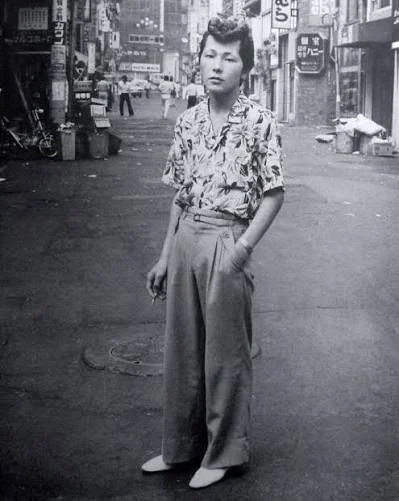
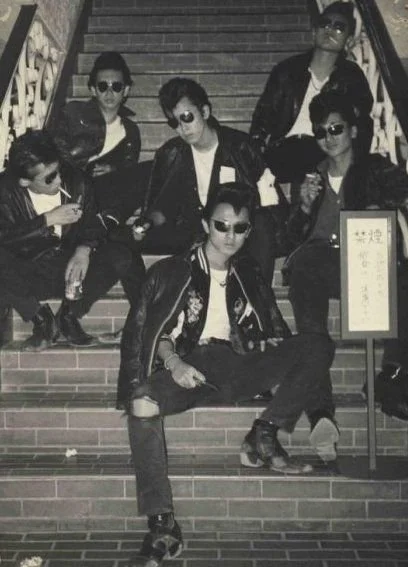
Born in 1945, Masayuki Yamazaki grew up in a small town in Hokkaido. During his childhood, he noticed that all the best dressed people were the local gangsters - they had the money and the connections to buy the latest and ‘coolest’ clothing. Yamazaki was inspired, stating that “all cool fashion is delinquent fashion”. Yamazaki and other teens in small towns wanted to be rebels, replicating the style with aviator sunglasses, western jackets, mambo pants and the regent hairstyle (also known as a pompadour). Wealthier teens in Tokyo didn’t see things the same way, as they were under in the clean-cut Ivy influence.
Yamazaki moved to Tokyo and began working at Mitsumine, a traditional menswear store in Shinjuku. His style shifted to match the Tokyo scene, Ivy: a VAN jacket & dress shoes. One day, a man walks into Yamazaki’s store wearing a leather jacket, black t-shirt, black slim jeans and a regent hairstyle filled with grease. The man was part of a movement called sukaman (meaning Yokosuka Mambo), a group of Japanese men who hung around the nearby US military base, picking up the delinquent style from the American navy.
This colloquailly became known as the ‘Yankee’ trend. Yamasaki was transfixed, and found his calling. He rejected the Ivy style, combed his hair into the regent style and moved from Tokyo to Hayama, a small beach town closer to the sukaman look. He read Men’s Club for a list on what not to wear, to “do the exact opposite of what was written.” Yamasaki travelled to London and found his inspiration further, he visited the rockabilly boutique Let it Rock, run by Vivienne Westwood and Malcolm McLaren and saw the neo-Teddy Boy scene firsthand. Yamasaki packed his suitcase with vintage clothing bought from Brighton Market; hawaiian shirts, bowling, creeper shoes, pleated pants and shoulder-padded suit jackets.
“I want to be an outlaw - even a little snotty punk is fine.”
In 1976, Yamasaki opened the first vintage retail store in Harajuku called Cream Soda. He sold the clothing he brought from the UK for six times the price, and the store was an instant success. After selling out of his initial stock, Yamasaki travelled to San Francisco to look for more cheap secondhand clothing. A British hippie approached him and claimed to have piles of clothing hidden in his home, and Yamasaki found ¥2 million worth of vintage garments to ship back to his store. He then found a shipping container full of clothing, worth ¥100 million. It all sold out instantly, and just like that, another branch of Ametora was born.
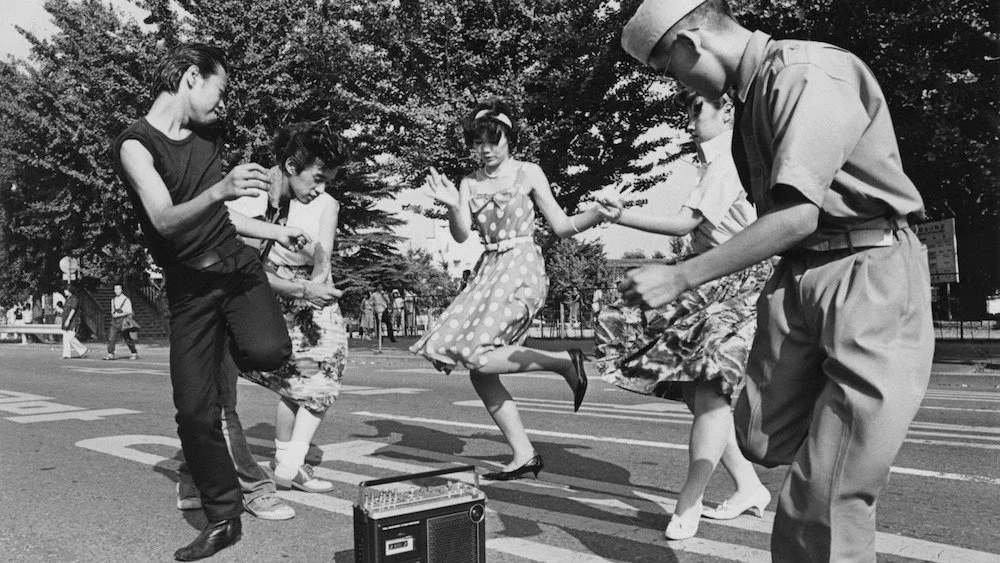
Ex-bozosoku members (gang members) and young Japanese adults would congregate in Harajuku every weekend to meet up and dance to 1950s American music. Men wore leather jackets, white t-shirts and the regent style, and women wore poodle skirts, bowed ponytails and white lace socks. The media called them ‘Rollers’. Due to the ties to the bososoku, the ‘roller’ trend was viewed as delinquent, with many young adults arrested in Harajuku for underage drinking and smoking. Cream Soda clothing was confiscated by teachers as “bososoku paraphernalia”. Just like with Ivy just a decade earlier, any new fashion trend that was embraced by Japanese youth was viewed as delinquency by the older generations and middle-class. While in some cases the assumption was true, it wasn’t for the majority and these affected brands needed to show the separation between the clothing and the lifestyle.
More American than America
What started with Kensuke Ishizu became the culture of youth fashion in Japan and the modern Japanese menswear industry we know today. Japan’s interest in American fashion kept the knowledge and aesthetic alive, while the Americans were trying to shed themselves of ‘strict’ dress rules. I believe the reason American fashion subcultures are still alive is due to Japanese intervention. Even traditional American brands like Ralph Lauren and the Gap used photos taken by the Japanese as their best source for authentic American traditional style, helping the brands return to their own roots.
Whilst Japan replicated American style, they also implemented their own meanings onto the garments. Japanese clothing is rule-driven, studied and high-quality, which was added onto the foundation of American garments. In addition, the nature of life for Japanese youth added onto the rise in fashion subcultures. Furniture wouldn’t fit into the cramped Tokyo apartments and cars didn’t work either. Fashion gave a better return on investment, an opportunity for identity and community.
Since VAN in 1951 and over the next 75 years, Japan has adopted, absorbed, lived and improved upon American style. As the original mavericks of Ametora have since passed, such as Ishizu in 2005 and Yamasaki in 2013, new entrepreneurs and designers have taken their place and continued the integration and innovation of Western style for the Japanese youth, either through replication or antithesis; Jun Takahashi, Nigo, Thom Browne, Junya Watanabe, the Osaka 5 etc. Ametora is now passed down through generations, not just learnt from magazine pages. It’s now a way of Japanese life, not a fringe trend, and is now a leader of Western style instead of a follower as they have been in decades past.
From surrendering to the US in 1945 and being occupied by American forces in the years after, to protesting against America’s part in the Vietnam War; Japan and America have had a difficult and arduous relationship over many, many years. But alongside that, Japan has always seen America as a way out, an aspirational lifestyle and a muse for their own identity. Fashion created that connection between these two historically opposing sides, a feedback loop between manufacturers and customers, influencers and fans, inspiration and innovation. Music, film and lifestyle followed suit, but fashion was the driving force and a connecting puzzle piece that just fit perfectly between the two vastly different sides.
Japan took American fashion and truly made it their own. Piece by piece, trend by trend, subculture by subculture, generation by generation. It’s often said that the Japanese do Americana better than the Americans themselves, and I think that’s true. They found an interest in something no one else did, they found an entire life that the American’s viewed as mundane.
Ametora, ‘American Traditional’, was the archive, the foundation and the breeding ground for American fashion. It’s now as important to Japanese history as it is to American history.
It’s almost impossible to detail every aspect of the Ametora movement, and there’s a lot that I’ve missed. But I’ve cast a widespread net that gives you the overall history. Maybe one day I’ll go through what I’ve missed; Nigo & BAPE, the Osaka 5, Nowhere and Jun Takahashi etc. Also after writing this article I saw a pair of Evisu jeans at a vintage market and it felt like I was seeing a celebrity.