
A System Designed to Break - The Enshittifcation of Clothing
I have a bone to pick with the consumer clothing industry.
I’ve recently been wearing a pair of vintage suit pants, almost on a daily basis. I’m assuming they were made in the 1980s (that’s purely based on vibes, I don’t actually know for sure), And let me tell you; there’s a fundamental difference in quality to what I’m used to.
The fabric is thick and keeps me warm in the freezing Melbourne winter. The pocket lining is a different fabric, but just as thick and high quality. The waist is adjustable across multiple sizes and all pockets (front and back) are a decent size (and actually exist in the first place). There’s no pilling, not one loose thread. No sign of degrading quality or wear and tear. If I told you I bought them yesterday, you wouldn’t have any reason to doubt that.
Compare that to another pair I purchased a few months ago from a chain store; thin fabric, loose threads, elastic waistband and pockets that both are too small on the front and non-existent at the back.
So, the question is - why is clothing getting worse? Yes, it’s a lot cheaper and more accessible, but why is almost everything on offer just, bad?
There’s a term going around at the moment, and while it was first used to describe digital platforms, frankly it can describe anything today. Enshittification - the gradual decline in quality over time. So I’m applying it to clothing, because it’s correct. So, why are clothes getting shittier? And are we funding a system now designed to break after a few wears?
Fabric choices
Our biggest nemesis - polyester.
Since the early 2000s, polyester overtook cotton as the most in-demand fibre, which coincides with the opening of fast fashion retailers like H&M and Zara.
A kilo of polyester (derived from petroleum) often costs half as much as a kilo of cotton, which means brands can create the same amount of clothing for basically half the price. Fast forward to today and synthetic fibres represent 69% of all textiles used, projected to increase to 85% by 2030 (according to the Ethical Consumer).
Polyester, along with many other synthetic fibres, is derived from petroleum. They’re non-renewable and carbon-intensive, relying on the high temperature from coal plants to be melted and spun into thread. They’re also notorious for micro-plastic shedding through washing, wearing and drying, accounting for 35% of the microplastics present in the ocean (according to Wayla)
There’s one caveat to using synthetic fibres however - they are one of the best choices for performance and functionality. Stretch, moisture-wicking, durability, weather-resistance are all qualities of polyester, meaning that for some use cases, polyester is undeniably best. But their widespread use and environmental impact needs to be managed and reduced.
But don’t forget that natural fibres have their benefits too - they regulate temperature better, biodegrade, are breathable and age well over a longer period of time. Linen, cotton, bamboo - all good choices. So, when you’re looking at something to buy, have a quick glance at the fabrication and have that weigh into your decision.
Fast fashion
Our other biggest nemesis - fast fashion.
Typically, fashion brands release a couple of collections per year, your average summer, fall, winter, spring - maybe a pre-fall and pre-spring if you’d like. These collections take usually months to fully design, manufacture, distribute, market and sell a garment, with some being designed a year before it hits stores.
That’s not the case for fast fashion however, with a range of 20-100 seasons per year and a timeline of as little as 15 days. Think about that for a second, 15 days to design, pattern, choose fabrications and trims, manufacture, quality control, tag, package, ship to distributors/stores, visual merchandise, market and sell - with most of this happening across multiple countries. How is that even possible? (Cutting corners, that’s how). Many new designs reuse the same patterns, or even remove certain fit details (darts, pleats etc.) to spend less paying designers, paying for fabric and paying for the extra manufacturing time. So if you’re wondering why modern clothing doesn’t fit as well, that’s why. And don’t get me started on the change from knitted colour work to printed knitwear. Cheap fabrics, cheap zippers and trims, cheap manufacturing process, cheap labour. And the more these business expand their SKUs, the worse it’s getting.
I also want to make this clear that cost-cutting is not just reserved for fast fashion brands. Even luxury brands are using these same tactics, maybe in a lesser way, but (in my opinion) unacceptable for how much you’re asked to pay. A Gucci sweater is not exempt from a cheap zip breaking after a few wears. Clothing is getting shittier because brands are choosing to save as much money as possible while producing more and more, at the expense of the customer, the worker and the environment.
But apart from appeasing stakeholders, why do brands want to spend less money? So the customer can spend less money (and technically buy more).
Cost of living
Our other other biggest nemesis - existing.
The issue is that customers are now used to spending far less on clothing. Those who shop at brands like Shein understand that they can buy 15 different pieces without much financial strain, especially with 90% discounts at some times over the year. The newer generations who have grown up seeing a t-shirt sold for $10 is not going to understand spending $50 instead, and nor would they get why it’s fair to be worth that much - it’s creating a false economy, inherently devaluing clothing.
Don’t get me wrong, everything is expensive now and many don’t have enough financial freedom to spend much on ‘non-essential items’. I’m not trying to blame the average customer where the brands should be blamed instead, more often than not, there’s no other choice. I’ve been in the same boat, the idea of spending $20 vs $60 on an item of clothing for a new job for example just worked better for me, especially when money was tight. So I understand why many people choose to shop at fast fashion companies out of necessity. But there’s a point of excess; buying a top just for one event, with the plan to never wear it again; buying multiple items just because their cheap and on trend (you can read more about the increase in ‘micro-trends’ here). I don’t have a problem with those that don’t have a choice, I have a problem with those who do have a choice and don’t choose better.
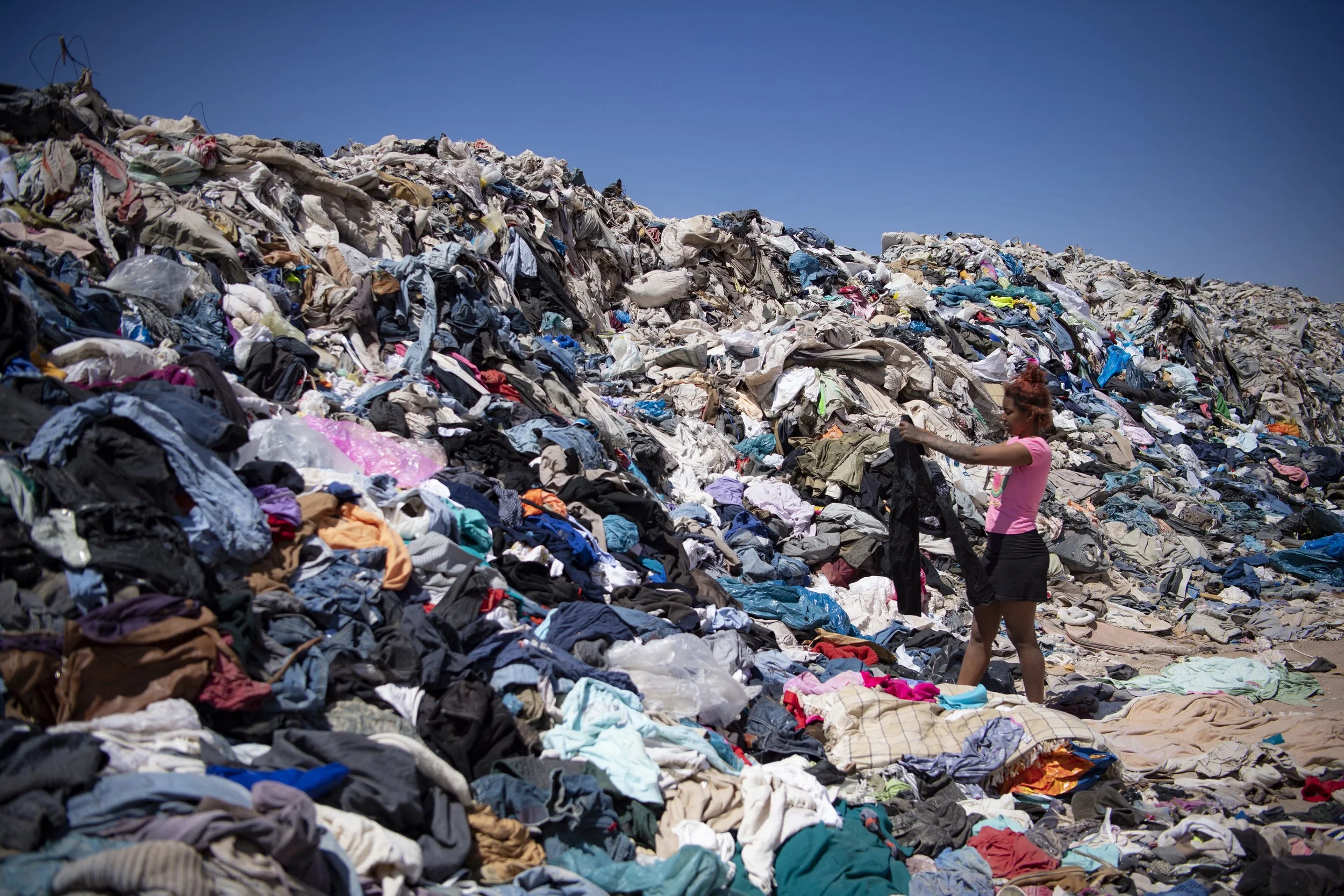
This trend of treating clothing as a one-and-done thing, especially when it’s sold so cheaply by fast fashion brands, just creates this perpetual cycle of; making, selling, using, wasting. And this clothing just ends up in landfills, almost impossible to recycle and unlikely to breakdown due to its high synthetic content.
So, what now?
Fashion’s Oroborus, the snake that eats itself. Once it starts, I don’t know if its possible to stop it.
So, to answer our question, yes, clothing is getting shittier, yes it’s getting cheaper. And yes it’s affecting our world more than we realise.
Before we get lured in by intense sales and trends - let’s take a step back, have a think, look at the fabric content and reconsider. Slow fashion is the way to go; vintage, secondhand, considered. Clothing is supposed to last a long time and be reliable, let’s try to get things back to the way things were. Who doesn’t want clothing that can be passed down for generations and kept for a lifetime? A wardrobe that slowly changes with you, not with social media? How good does that sound?
And it’s not all on you, the customer. There are many brands leading the charge in intentional and sustainable fashion, creating initiative to encourage repair and donating rather than just throwing out. Patagonia and Nudie Jeans have free repairs, Assembly Label utilises organic cotton in their basics. There are brands out there trying to make a change, we just need to make it clear on what we support and expect from our clothing.