
“It’s not a bag, it’s a Birkin” - Veblen Goods
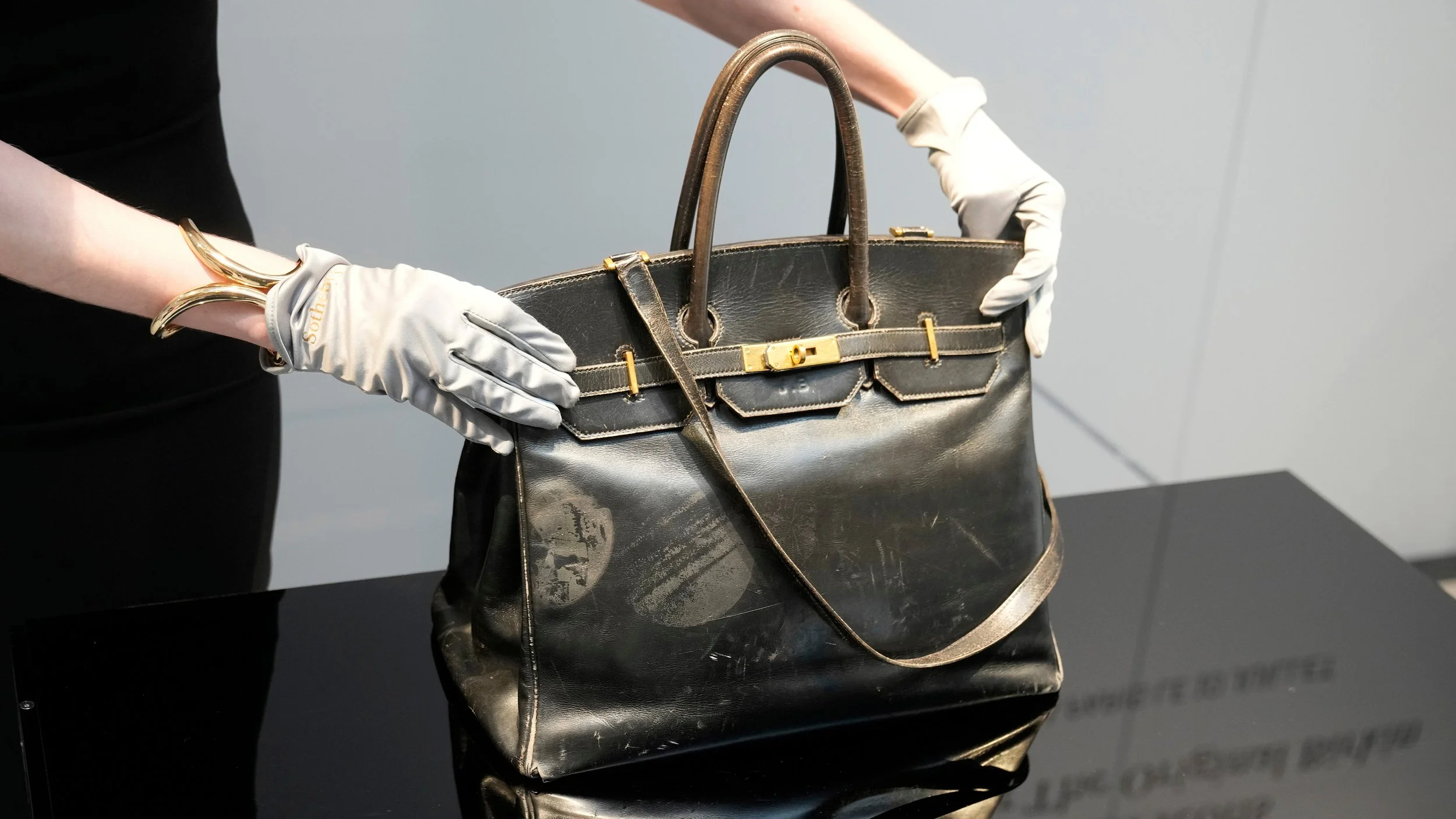
Alright, so this is probably the closest I’m going to get to talking about financial trends. I’m a writer, not a financial analyst, but the way that fashion and finance intersect is interesting to me so I’m going to give it a go.
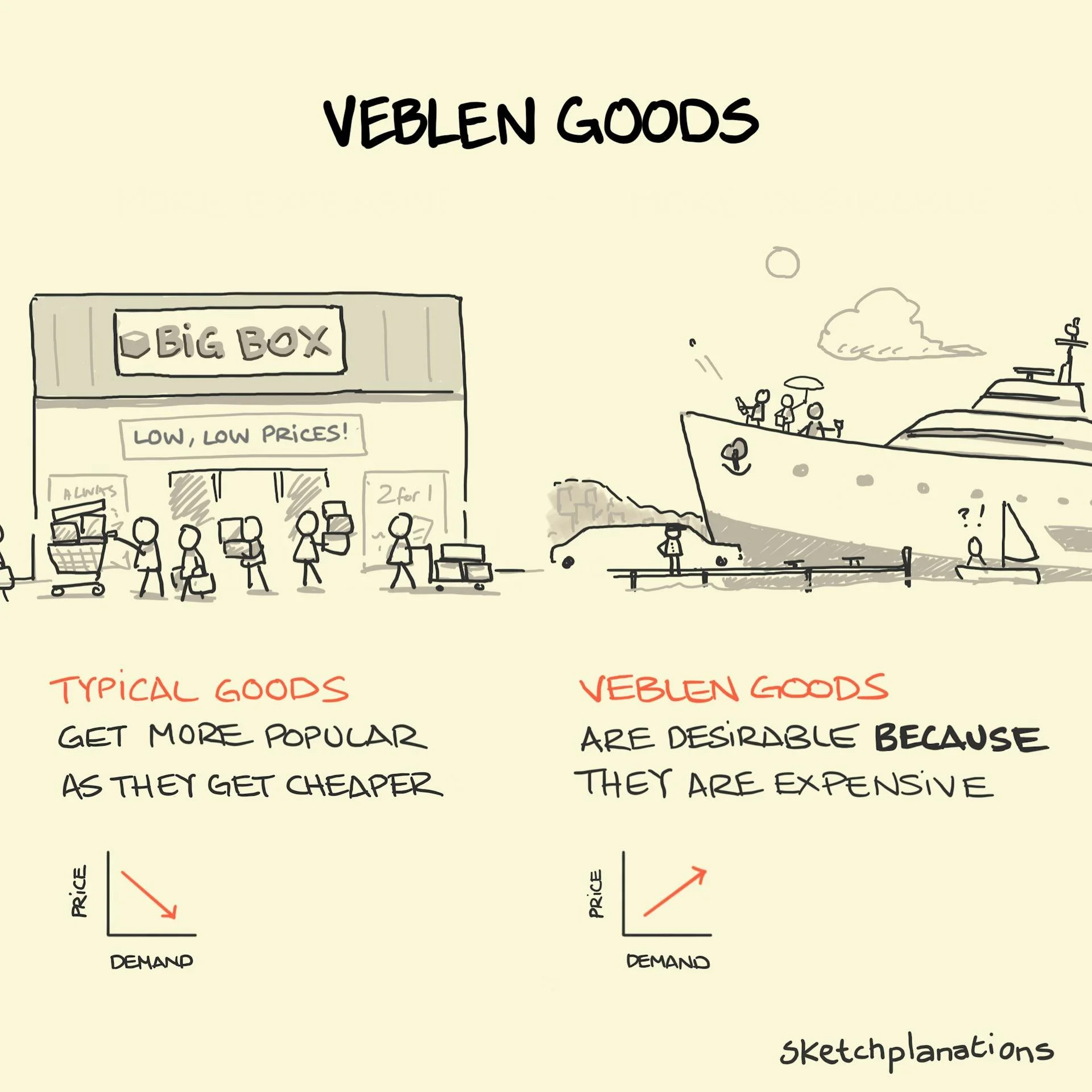
Veblen goods were first explained by American economist Thorstein Veblen in his book The Theory of the Leisure Class, written in 1899. You may not know what a Veblen good is, but I’m 100% sure that you’ve seen an example of it and maybe even wanted one yourself. Think of a Birkin bag, a Rolex, a Ferrari - what do all of these have in common? They increase in demand the more they increase in price. This is the opposite of how normal goods are priced - the higher the price, the lower the demand . Veblen goods defy this common curve.
Despite being worth hundreds of thousands, Ferrari have a waitlist that spans across years. Even when they increase in price by 14% each year with a limited number available, many spend tens of thousands in-store to even be offered a Hermes Birkin bag. And, many would spend retail prices for a secondhand Rolex. The more expensive and exclusive an item is, the more people want to have one.
When you think about it, it shouldn’t really make sense. Surely if something becomes more expensive, less people would want to buy one. If it becomes so financially unobtainable, why do people want to obtain one? Why do people want what’s most expensive? How does that work?
Well - its a combination of a few things. Here we go:
Veblen goods can exist across many different areas of society. Real estate, yachts, rich people stuff - you know the drill. However, fashion is one of the biggest Veblen categories. Unlike mansions, art collections etc, fashion is on constant display and seen by everyone. Can’t really take your yacht everywhere you go, but a Rolex? Constant, easy to show off and easy to be seen.
Among most retail industries, the higher the item price, the higher the perceived quality. If you see a $50 pair of shoes and a $200 pair of shoes, the thought would cross your mind that the $200 pair of shoes must have higher quality materials or better construction. And whilst this is correct in some cases, in others it isn’t.
A good example of this is Chivas Regal whiskey - they raised their prices and changed nothing else, no improvement in ingredients or packaging - and sales skyrocketed. The demand increased as the price did, customers thought that the higher price must’ve meant a better product, and decided to buy. But it was still the same whiskey that was initially priced much lower.
One of the big things that represent Veblen goods in fashion is the idea of status symbols. Now, a Ferrari is a status symbol in it’s own right, but this is a fashion blog and I’m not talking about cars. Being able to own and wear luxury fashion and accessories is a way to show your wealth or high status in society. It’s a way to show how rich you are, or how well connected you are to the fashion industry, a way to showcase your luxurious lifestyle. Here’s why Veblen goods are often called ‘snob’ goods.
Higher priced items are often unachievable for the wider society, meaning that if you own one, you must be doing something better or earning more than everyone else. People want to own these Veblen goods to move into an higher echelon of society or to at least be perceived that way. A budget car can achieve the same basic purpose as a Ferrari, to get from point A to point B, but the owner of the Ferrari is viewed differently than the owner of the budget car. This is what drives Veblen goods, the potential of a higher status, to own something that very few can achieve.
Another interesting this is that Veblen goods are often unaffected by overall economic trends. Any form of recession doesn’t particularly affect the price or demand of luxury goods, if anything, people may have a greater need to show off their status during these times.
The thing is that Veblen goods are carefully curated to be seen that way, by ways of scarcity marketing. (Don’t get me started on scarcity marketing, I’m sure I’m going to write about it eventually.) This basically makes a product harder to obtain through forms that isn’t just price - waiting lists, small or unknown product numbers and limited avenues to purchase (like only being available through sales assistants and certain boutique locations). This needs to be carefully curated, as any move that can alter the perception of value can deeply affect the demand for these luxury brands.
The Veblen good effect also applies to the resale market. For example, Rolex watches are often sold secondhand for far over the original retail price. The same also applies to Birkin bags, being auctioned off for on average 1.5x to 3x what it was originally bought for. This is because buying a Veblen good firsthand is typically extremely hard and time-consuming. Many can stay on waitlists for years and become a loyal customer without even getting a chance to buy a Veblen good, and if they do get the chance, its sometimes not even the specific kind or colour that they want.
It’s less about what we need, but about who we want to be seen as. It challenges our sense of value, beyond price and quality and shifts it into more of a sociological value. So yes, it’s not a bag, it’s a Birkin, but its also a comment on human nature.
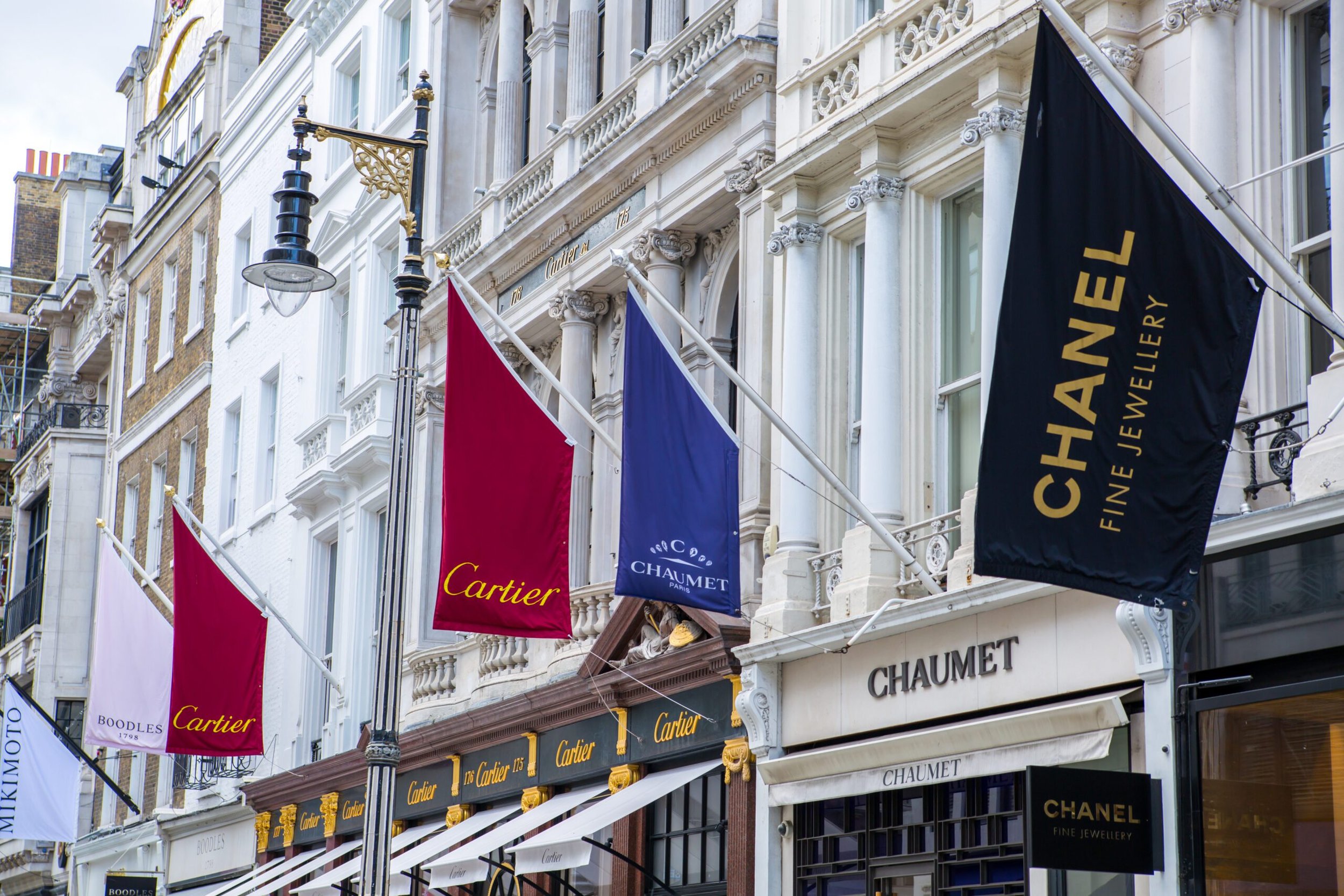
Here’s the thing though, 2024 might be the beginning of the end of Veblen goods. There’s an increase in the secondhand market over the firsthand market, 140% increase vs 42% respectively since 2017 (according to Fathom Consulting). This can be tied to the growing focus on sustainability and conscious consumption. Either the perceived value of Veblen goods is slightly decreasing in the public eye, or people don’t want to engage in ‘fast fashion’. Many people only buy what they need, and Veblen goods aren’t part of that. Or, if there is a need, a pre-owned is (in most cases) cheaper and more sustainable overall. And, with rise of social media and influencing, luxury experiences are the only category that experienced growth in 2024. So maybe it’s more of what you do (to show off), rather than what you wear (to show off). Its a slow shift, but it’s happening and I’m very interested to see where it goes.
Another interesting thing is the rise of dupes. There’s a lot I can say about dupes (and I’ll probably write more about how the industry’s going - add it to the list) but overall there’s a shift in the industry - dupes are now more popular and mainstream than ever. Many people engage in dupes (or knockoffs), and the response has changed towards for many dupes to be seen as more socially acceptable, or respectable to not engage with the luxury market and buy into the inflated prices. It’s a big and recent threat to the market of Veblen goods, another aspect to worry about as brands tow the fine line between price and demand.