
From Privilege to Protest - Shocking Pink
I have a love hate relationship with the colour pink. I used to love it as a kid, hated it as a teenager when I was on my androgynous journey and now love it again. It’s a difficult colour to describe, both in how many visual variations of it exist and its impact throughout society and gender. I used to hate it because it was just a ‘girls colour’, something so clearly feminine and carried so many stereotypes with it. But its meaning has changed throughout the years, and I’ve come back to respect pink and what it can represent (while still hating how deeply entrenched it is within gender, especially for children). So, I thought I’d go through the history of the colour pink, especially through the lens of fashion.
Rosy Beginnings
Pink is very uncommon in the natural world, which is why the colour entered the English language as a noun in the 17th century (when a Greek botanist used the term to describe the colour of carnations). As a colour itself, pink is a non-spectral colour, meaning that we’re not seeing actual wavelengths of pink light. We’re see an ‘extraspectral colour’ which means it’s a combination of colours, that our brains make out as one singular colour.
The Chinese symbol for the colour pink means ‘foreign colour’. In Korea, pink is a sign of trustworthiness, youth and vitality. In Japan, it represents the beauty of sakura and in history, slain samurai, “young warriors who fall in battle while in the full bloom of life” (Barbara Nemitz). In the west however, pink has an interesting history.
Throughout history, red was seen as the shade of masculinity; war, power, fire and blood, worn by soldiers in the West and samurai in the East. As pink is created through mixing white and red, it was not uncommon to see men wearing pink, as it was a lighter version.
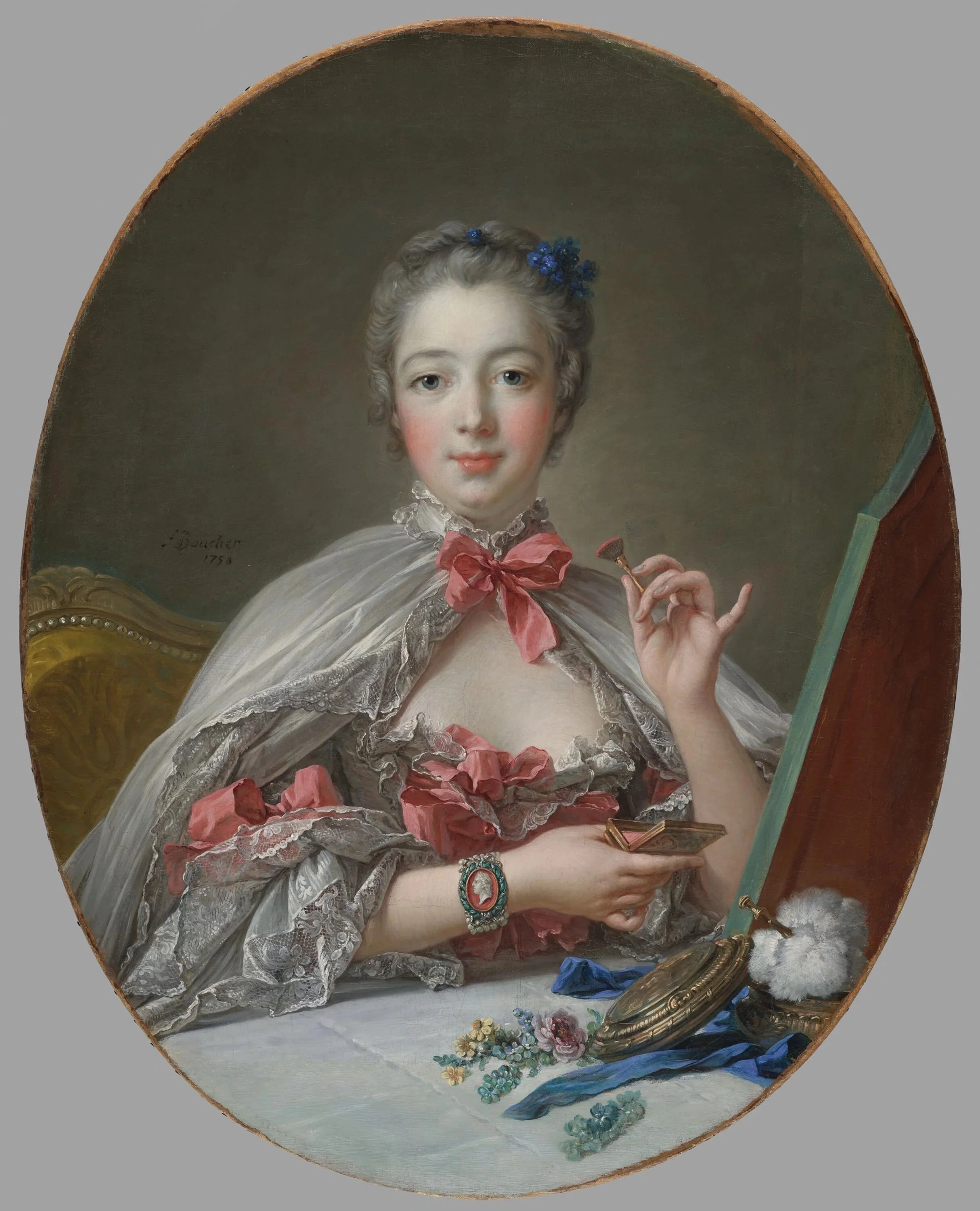
Madame de Pompadour portrait by François Boucher, 1750 - https://harvardartmuseums.org/collections/object/303561
Pink & Privilege
In the 18th century, pink was used in fashion, art and interiors for both men and women of the European bourgeoisie, as they were the only people who could afford the latest dye making techniques. Madame de Pompadour (the mistress of King Louis XV) was one of the biggest influence on the colour pink in fashion at the time, even earning her own shade - rose pompadour. Writer Xavier de Maistre wrote in his 1794 book, A Journey Around My Room, that ‘pink and white bedrooms for men would lighten their moods’.
The Rococo era introduced soft pinks into romantic landscapes and costumes, ornamenting highlights and soft representations. As the development of synthetic dyes increased, it gave a wider range of pink hues to the fashion designers of the time. Fun fact! Magenta was initially called Fuchsine (combining the fuchsia flower and the German word for fox), however it was renamed Magenta by the French after their 1859 victory over the Austrians in the Battle of Magenta.
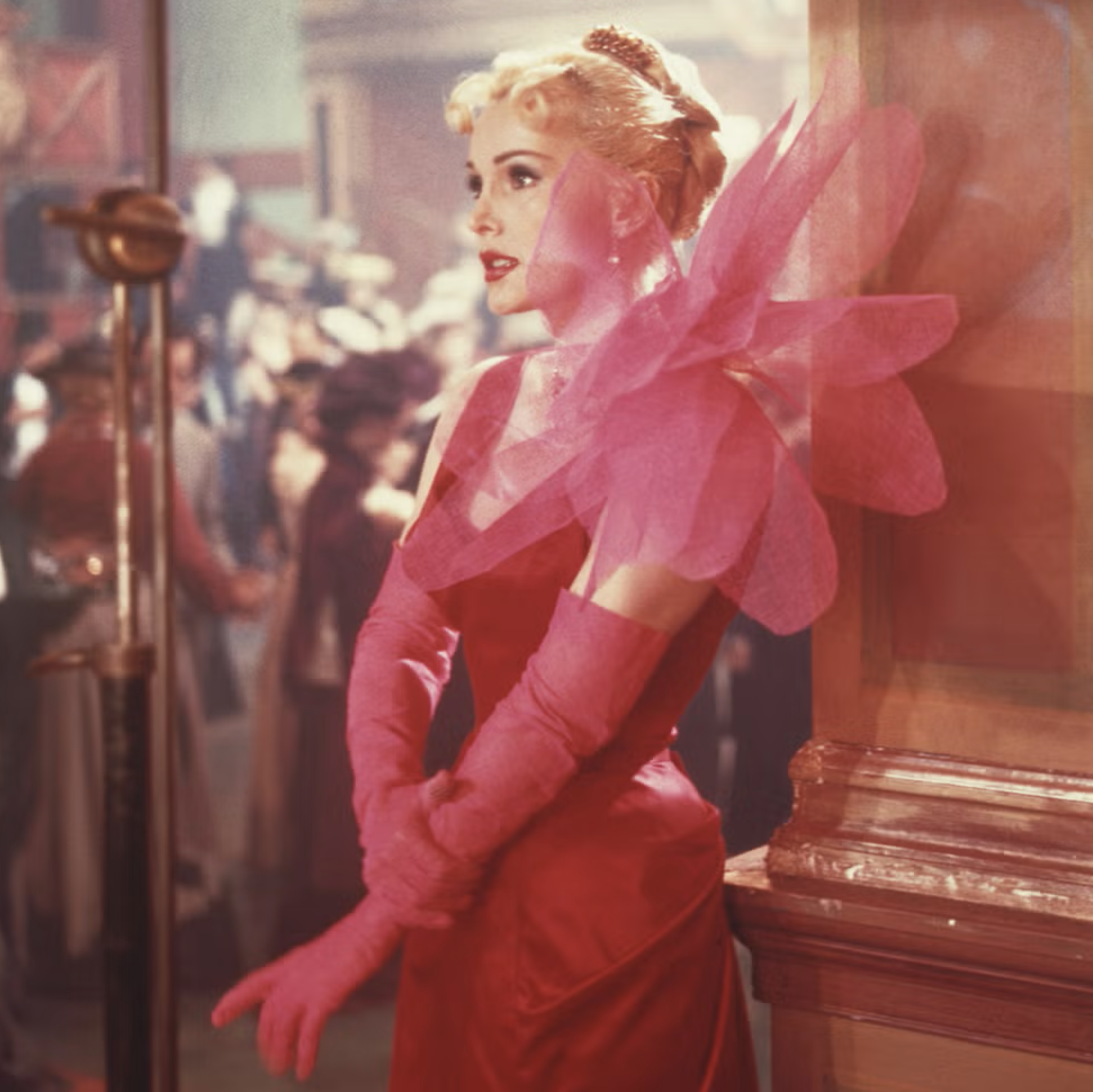
Zsa Zsa Gabor in Moulin Rouge (1952), designed by Elsa Schaparelli - https://www.elledecoration.co.uk/decorating/colours/a34011671/elsa-schiaparelli-shocking-pink/
Back when Pink was Masculine
As dye making became cheaper and more commercialised, pink fabrics became less subtle and turned into magentas and hot pinks. In the early 20th century, a gendered divide was forming, just not in the same way as today. A 1918 article by Earnshaw’s Infants’ Department stated that “pink is for the boys and blue for the girls. The reason is that pink, being a more decided and stronger colour, is more suitable for the boy, while blue, which is more delicate and dainty, is prettier for the girl”. In the 1920s, big-box retailers became more gender-specific, but overall unsure, with Macy’s using pink for girls and Marshall Field’s using pink for boys. A 1927 survey by Time Magazine resulted in 60 percent of the public viewing pink for boys and blue for girls.
The titular pink of this article, Shocking Pink was created in the early 1930s by none other than Elsa Schiaparelli. She called it bright, impossible, pure and undiluted. It was used as the primarily colour for her Shocking fragrance, giving the colour it’s name, but became the fashion house’s signature colour in 1937. From there, it spread to other designers, such as Gilbert Adrian, Charles James and Cristóbal Balenciaga.
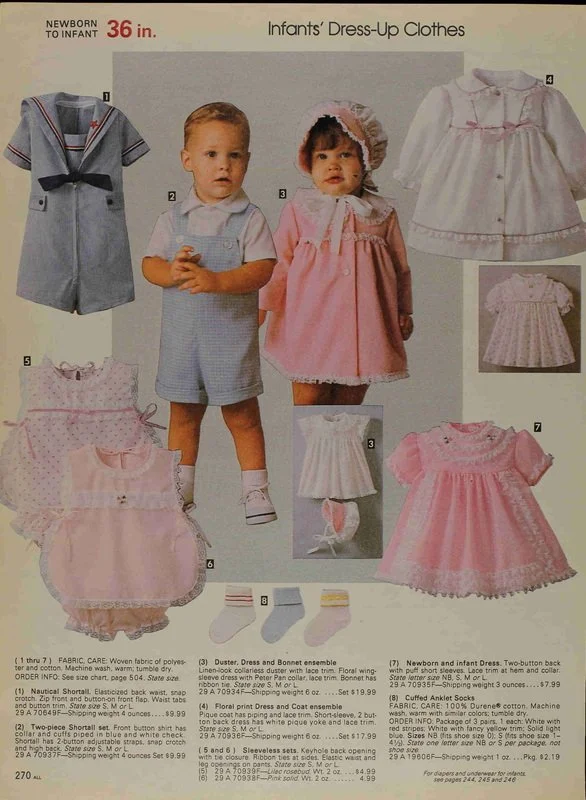
A 1983 Sears Catalog - https://gender-mystique.weebly.com/blog/babies-and-toddlers-1983
Post War Pink
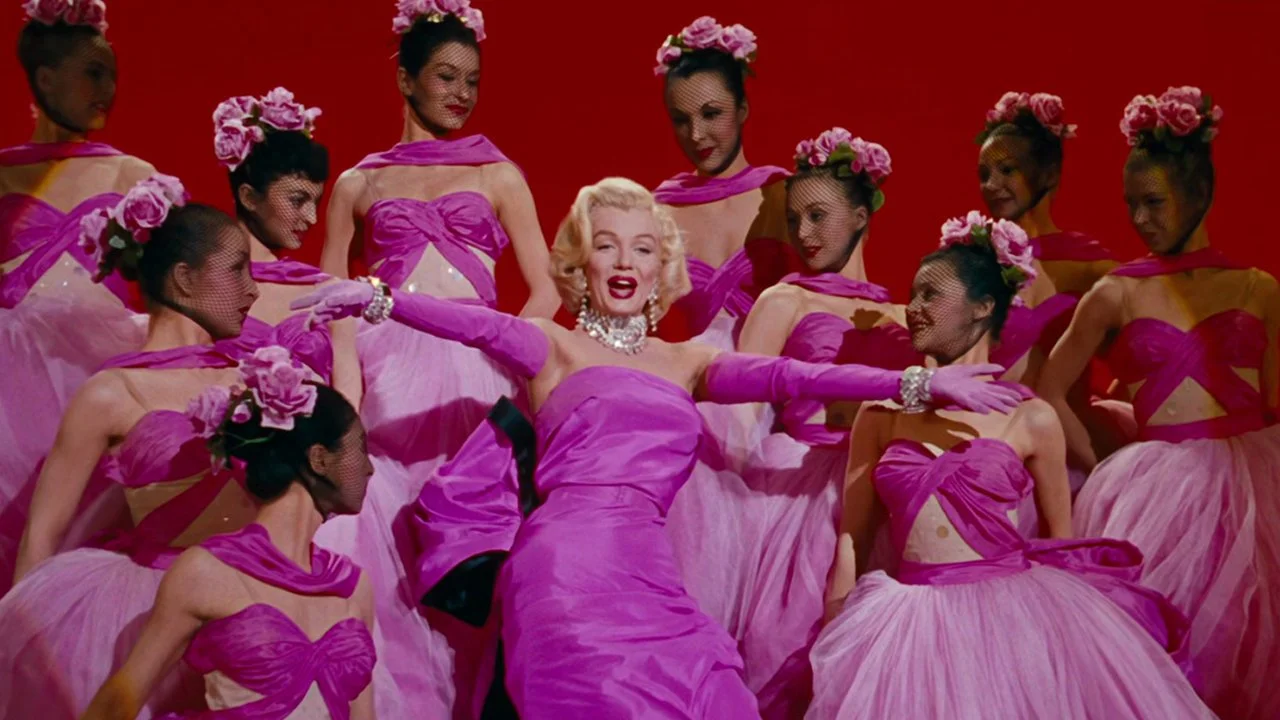
After WWII, pink became a colour more associated with femininity. The push towards the ‘traditional’ family lifestyle, roles and values were pushed by brands in the post-war world. Bright colours (including pink) were focused towards women in order to remove them from the workforce and reestablish their traditional roles post-war. Alongside this, menswear became more neutral and dark, referencing the uniforms of their military service. Female icons like Jackie Kennedy (upon the assassination of JFK in 1963), Barbie (the trademarked Barbie Pink) and Marilyn Monroe (her performance of Diamonds are a Girl’s Best Friends in Gentlemen Prefer Blondes in 1953) wore pink, further influencing society to view pink as a feminine colour.
Towards the 1980s, parents were able to know the gender of their children before they were born. Retailers took this as an opportunity to sell gender-specific toys, clothing and gifts, further reinforcing the gendered stereotype of the colour pink.
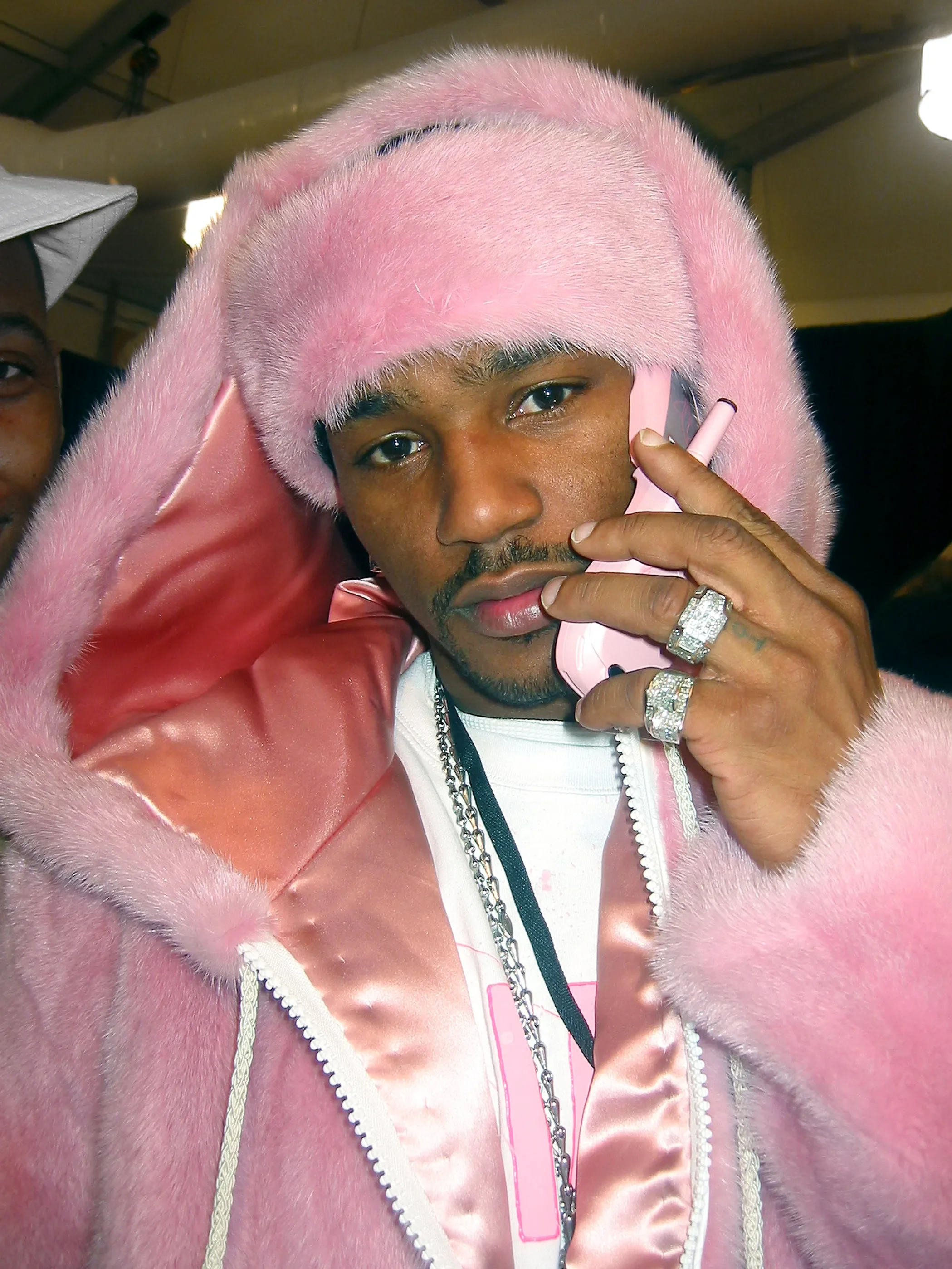
Cam’ron at New York Fashion Week 2002 - https://www.gq.com/story/camron-dipset-interview
Pink Reclamation
Pink became a symbol for resistance in the 1980s. Courtney Love wearing pink babydoll dresses with her pink Stratocaster during her concerts. Pastel pink became a widespread colour for shows like Miami Vice, turning pink into a more gender-neutral colour across western society.
The early 2000s also led to another revolution regarding the colour pink. Hip hop in the 90s had a hardcore image - hyper masculinity, homophobia, misogyny, violence and sexual content. It was all to strive for this ‘tough guy’ image, a promotion of masculinity where anything ‘feminine’ wasn’t for the rapper himself but the women he surrounded himself with. This was until October 2002, when rapper Cam’ron wore a light pink mink coat to New York Fashion Week. From there, it spread, as it gave others permission to play with colour. Kanye West became known for his pink polo shirts in 2004 and overall, pink became part of the rap industry and artist’s identities, as well as (in my opinion) creating a larger space for female rappers to come back into the then male-dominated industry.
An Androgynous Update
Honourable mention to Millennial pink; that rose quartz, soft, barely there pink. It was the cornerstone of Wes Anderson’s 2014 film The Grand Budapest Hotel, the newest colour of the iPhone in 2015, Pantone’s colour of the year in 2016. It was a more ‘androgynous’ pink, allowing itself to be utilised by both men and women, as well as brands appealing to both. This has further widened the reach of pink and its perception in primarily western society.
“How often do you see pink in architecture or machinery? How often is pink present outside of a gendered perspective? The insistence upon socialising women to identify with a colour that doesn’t exist in the ‘real world’ is, to me, a testament towards the patriarchal hierarchies that work to keep women submissive in everyday life.”
Power, Protest, Pink
Just as its connection to femininity, pink has become part of political and societal shifts in women’s issues and rights. According to Barbara Nemitz, “Pink has now become emancipated from the colour of harmlessness, cuteness, sweetness, innocence and the oppressed. It has gained an active and powerful role.” The bright pink became part of Breast Cancer Awareness, the pussyhat protests in 2017 to oppose Donald Trump and Supermajority.
Pink has been tied to ‘little girls’; innocence, playfulness, softness. It dictates how someone is treated. A baby wearing pink is instantly viewed in a different light. A woman wearing bright pink can be seen as a ‘bimbo’. Something in pink could be viewed as a toy, unserious. While in the recent decades, pink has evolved to represent feminine power, equality and reclamation. It’s difficult because pink has updated its meaning over time, especially in certain fields, but children’s clothing is still split by colour and theres still a lot of pink.
I’ll use a quote from artist Signe Pierce, as pink is slowly being rejected as a “secondary colour for a secondary sex”. Pink has slowly been liberated from its stereotypes, but there’s still a long way to go. Blue is now a standard colour for women to wear, there’s barely any issue with that. But pink still has its struggles to be worn by men, because its a ‘feminine colour’ and feminine things are still seen as lesser, secondary and more fragile. I hope the increased and transformative use of pink in fashion today further helps break this way of thinking.
Yes, I love pink. No, that doesn’t make me girly or childlike or cute. And I will still hate how gendered children’s clothing still is.
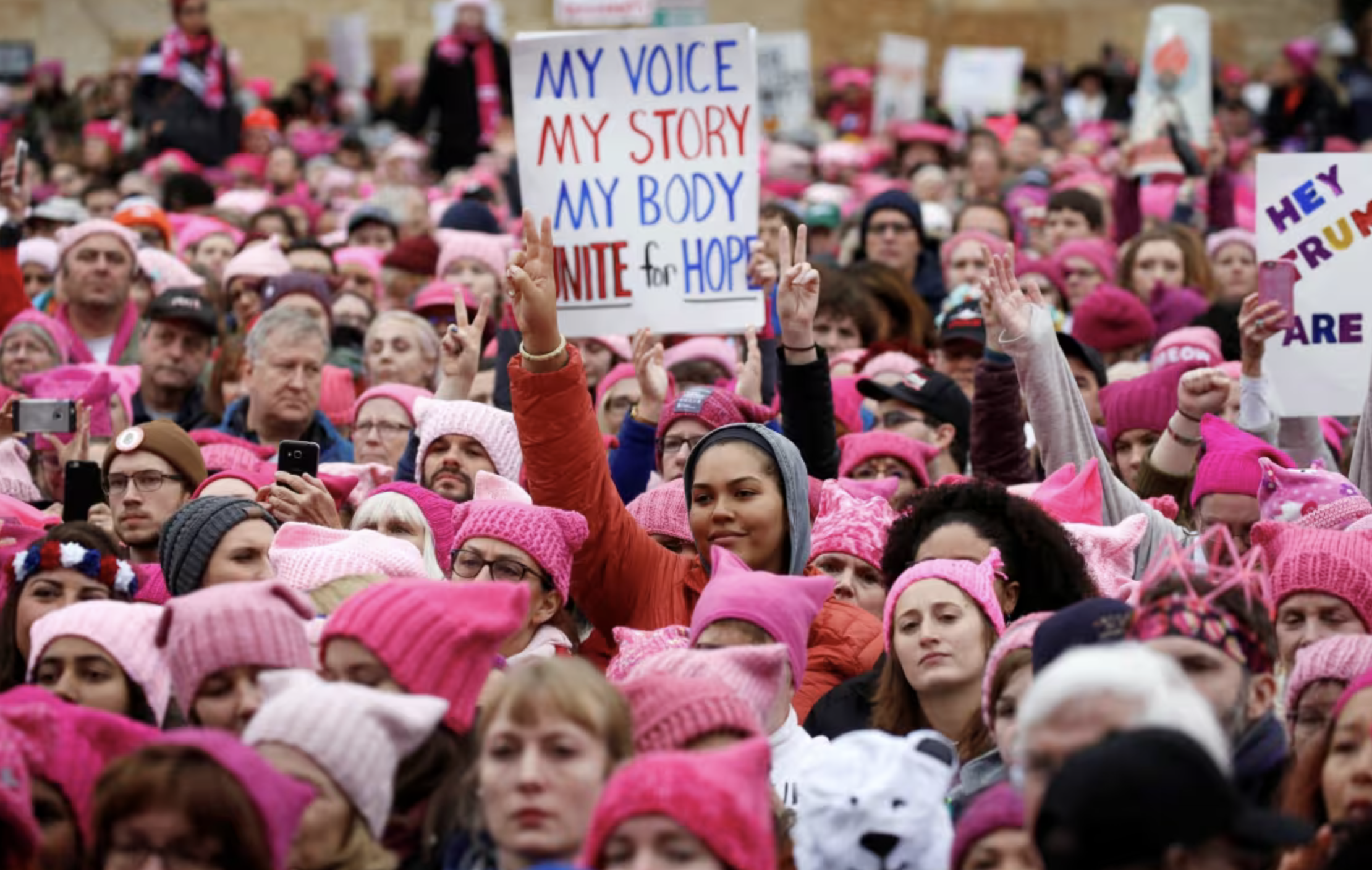
A Women’s March in 2017 - https://www.nbcnews.com/feature/nbc-out/pink-pussyhat-creator-addresses-criticism-over-name-n717886