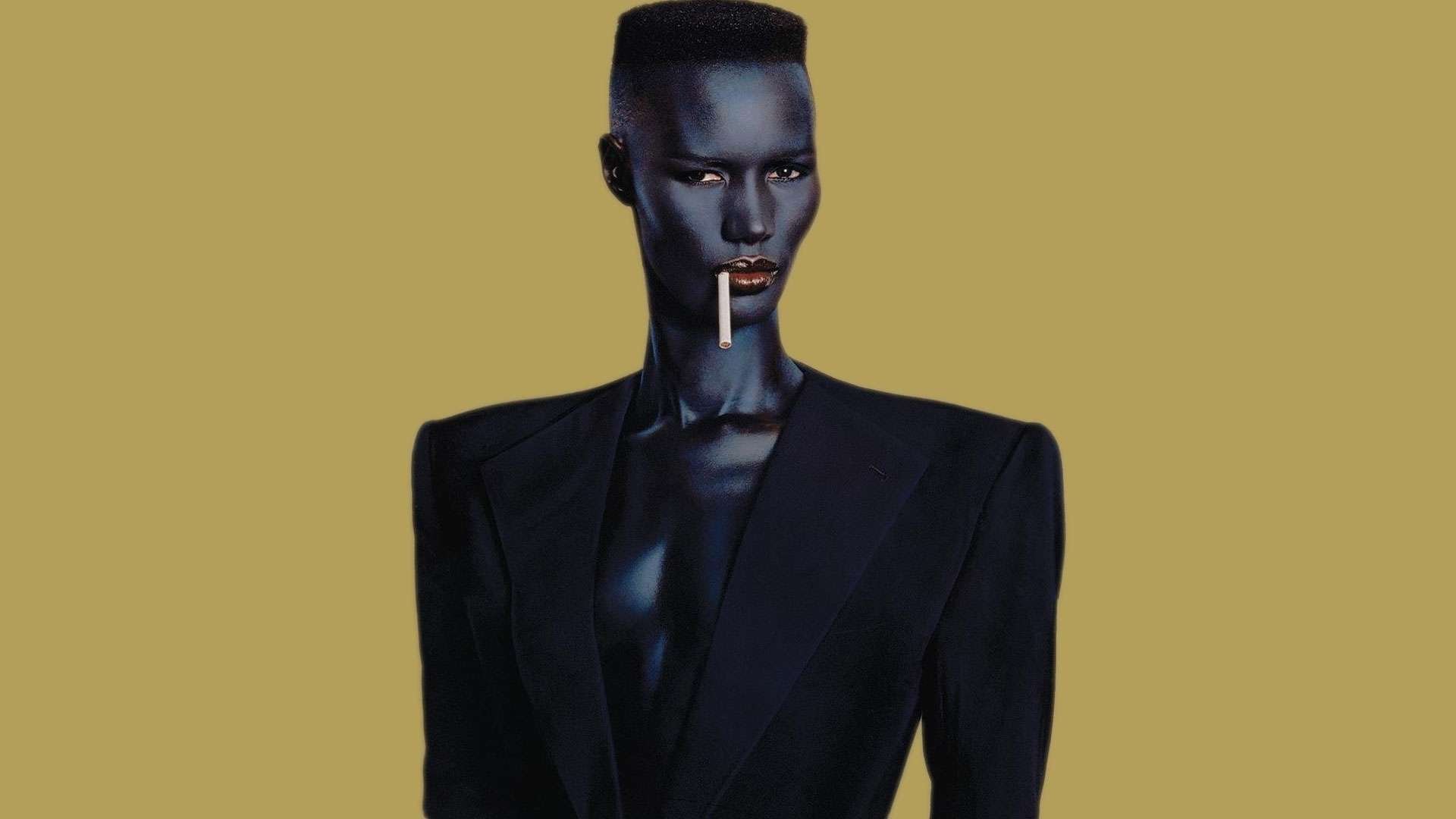
“I am the Blueprint” - Grace Jones
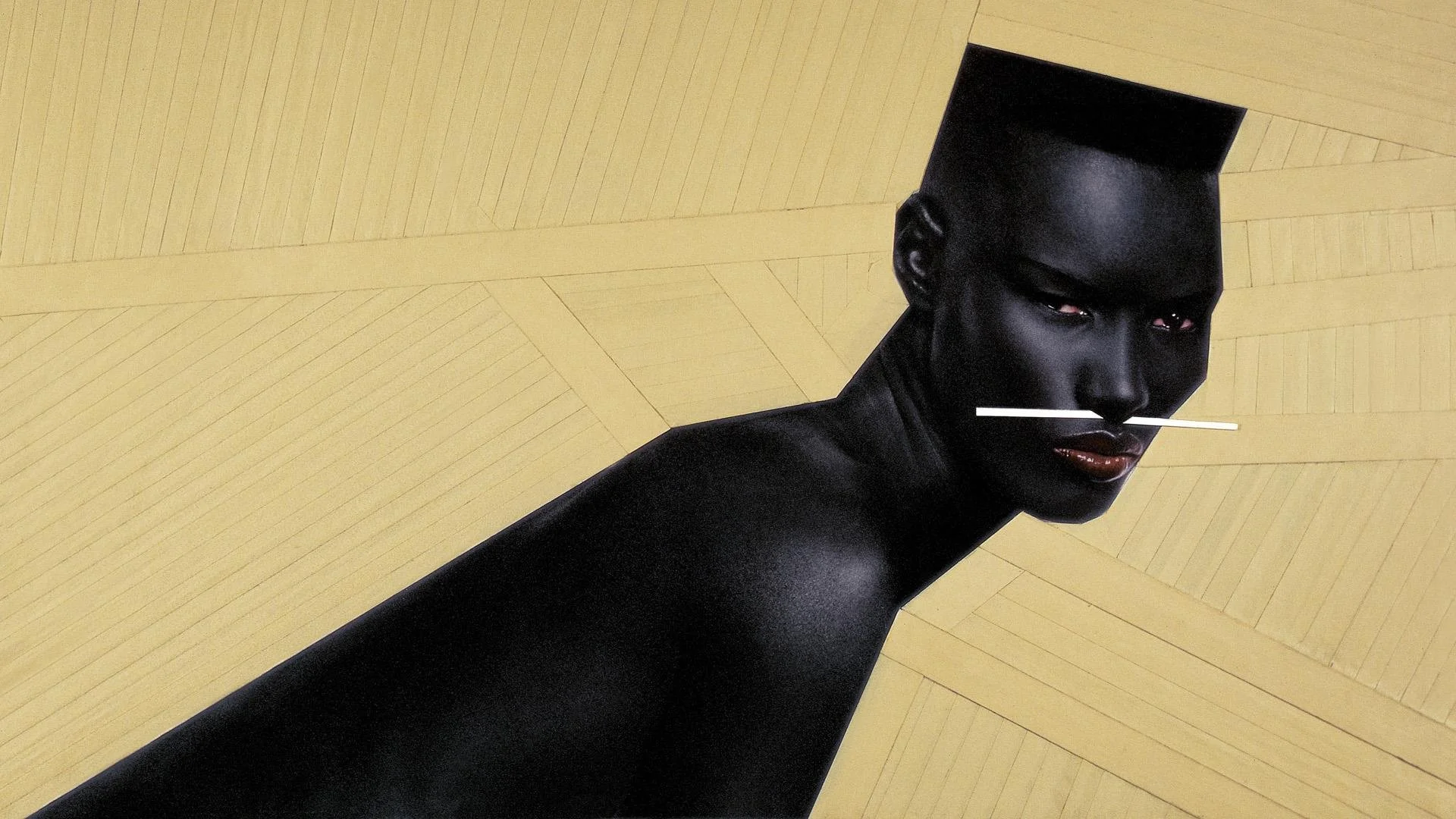
“I feel feminine when I feel feminine. I feel masculine when I feel masculine. I am a role switcher.”
Grace Jones was born in Spanish Town, Jamaica in 1948. Raised by her grandparents, Jones was raised in a strictly pentecostal household. Secular music was banned. Makeup was from the devil. She was not allowed to wear pants. She was forbidden from talking to the atheist kids on her block. And the discipline was intense. It wasn’t for what you just did, but for what you could do. At the age of 13, Jones moved to Syracuse NY to live with her parents. The religion and the rules within it followed her there. Her parents founded a church and were both ministers, and enforced the same restrictions Jones grew up with back in Jamaica. But Jones had her ways to express herself, just kept away from the eyes of her family. She’d collect costume jewellery in secret, snuck her Aunt’s makeup and flick through the pages of Vogue magazine, pasting her favourites on her bedroom walls. In her own way, Jones rebelled against her family, committing ‘spiritual treason’ by exploring her identity, or even just ways to find it. As she grew up, she created her own path, she experimented with psychedelics, worked as a go-go dancer, lived as a nudist for a month, joined a hippie commune and rode with the Hells Angels.
When she turned 18, Jones approached Willilhelmina Models with her portfolio. Although she was signed, the agents took a look and her and said basically said no. Her features were too sharp. She was too short. Her skin was too dark. In the late 1960s-early 1970s, America’s idea of beauty wasn’t Grace Jones. I’m sure blonde hair and tan skin was the only thing that was ‘marketable’ back then. When Jones cut her hair short and shaved her eyebrows, her agent was livid, demanding her to wear wigs for photoshoots and to never ‘pull a stunt’ like that again.
Taking rejection after rejection, Jones flew to Paris in 1970. (Technically she flew to Luxembourg and hitchhiked the rest of the way.) She continued to approach modelling agencies, still getting the same response. Too dark. Too much. Too ‘unsellable’. One agent said to her, “I can’t sell you. You’re too dark.”. Another agent told her that “selling a black model to Parisians was like trying to sell them an old used car.” with Jones replying "I am going to make you eat those words.” Jones stayed the course, moving into an apartment in Paris with two other aspiring models - Jerry Hall and Jessica Lange. Yes, you know who they are; Academy Award winning actress Jessica Lange and iconic supermodel Jerry Hall. Just imagine these three sharing an apartment in 1970s Paris, all at the start of their now iconic careers.
Slowly, the modelling industry began to catch up with Jones. Yves Saint Laurent booked her. Then Kenzo. Then Elle Magazine. Then Vogue. By 1975, Jones was working constantly, breaking the mould of the industry. As one photographer said, “You didn’t direct Grace Jones, you just tried to keep up.”. She would suggest poses that were aggressive and sculptural. She would do her own makeup (which was fair since many makeup artists at that time were not properly equipped to work on deeper skin tones). She would bring her own clothing if she didn’t like the styling. She exuded sex, masculinity and confidence, something that was new to the industry at the time.
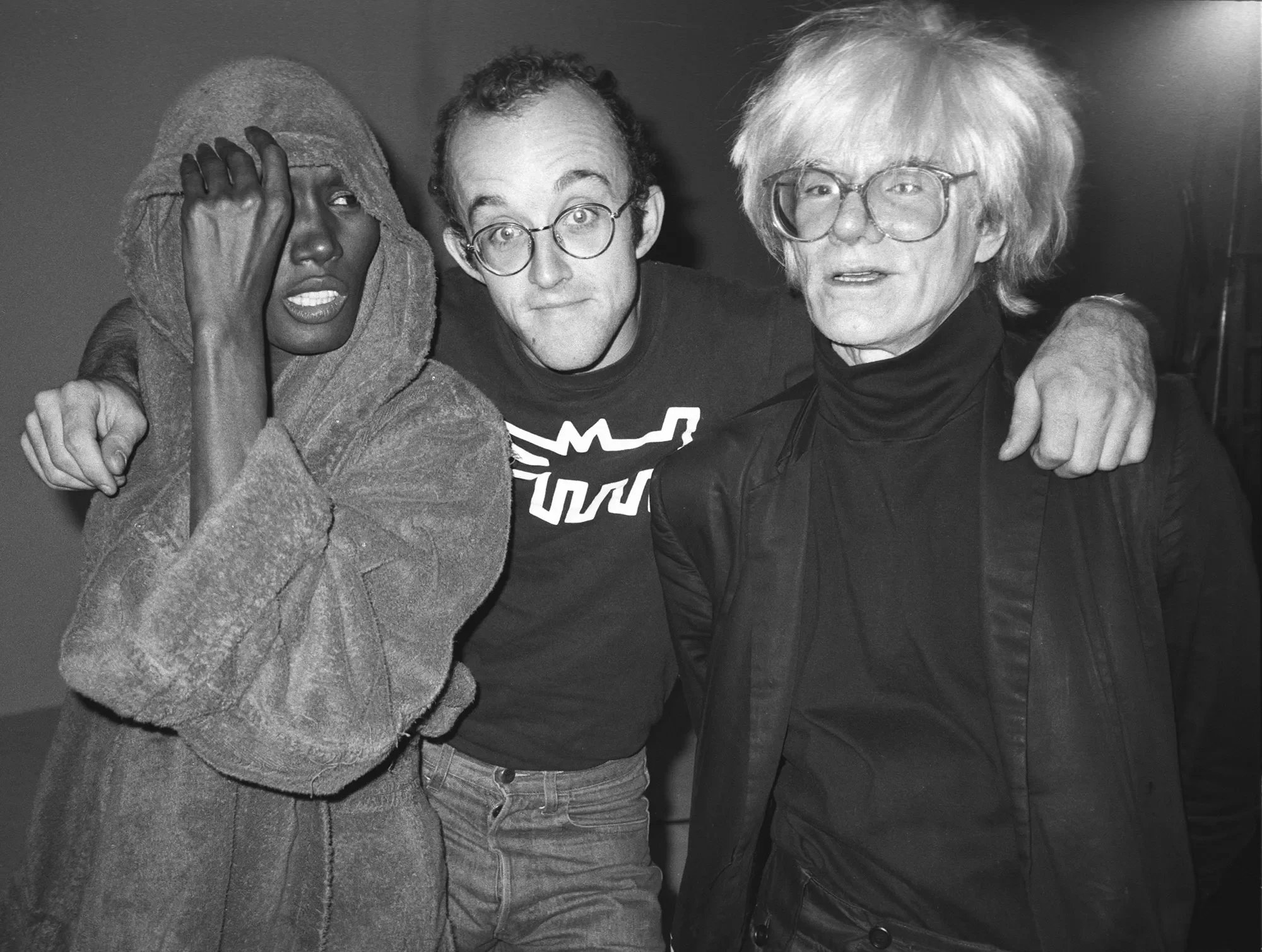
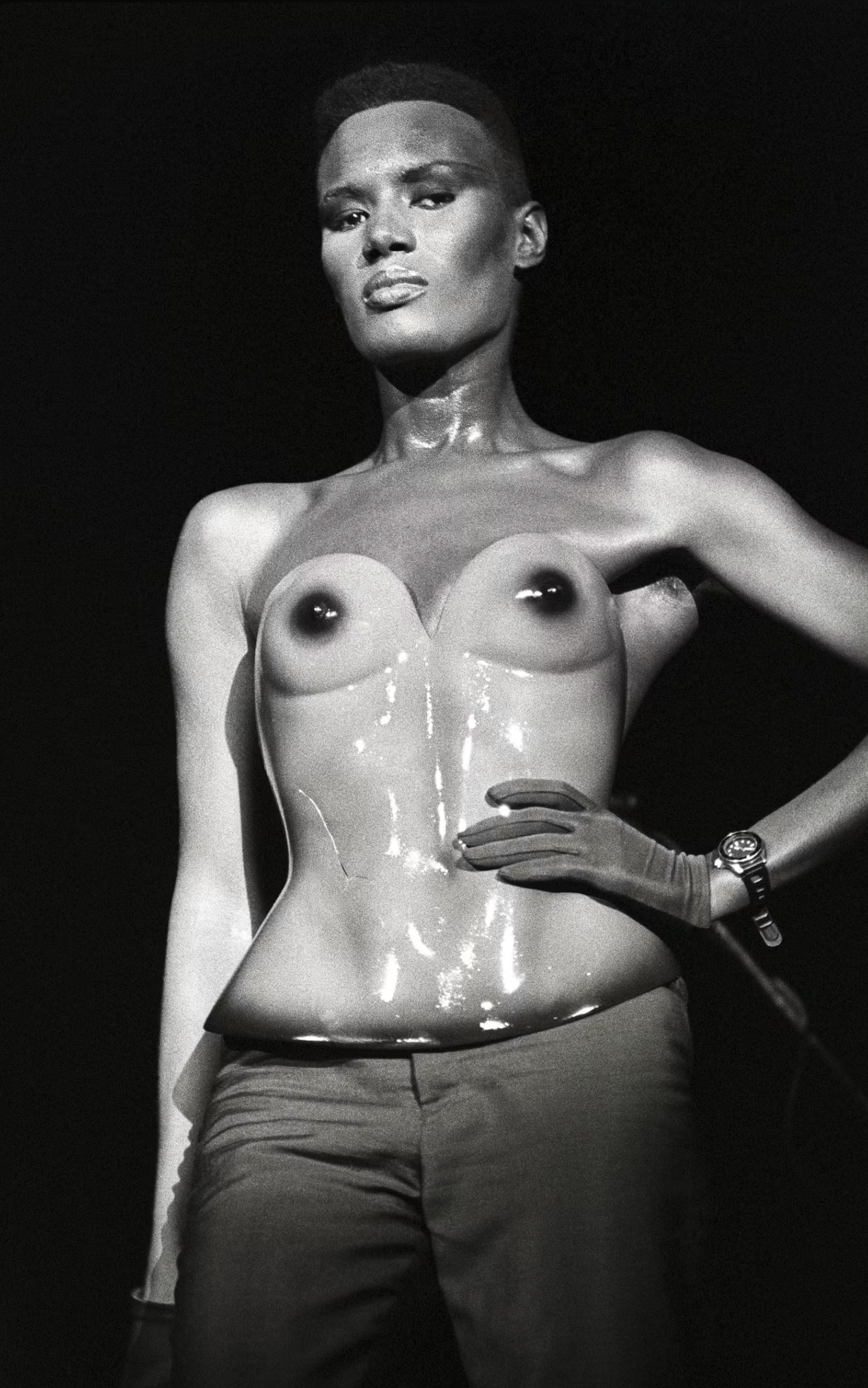
By 1977, Jones was a frequent face at the iconic Studio 54. But not as a guest, as a performer. With a deal from Island Records, Jones traded the runway for a stage, releasing three disco albums utilising her voice that ranges across two and a half octaves. She’d emerge from cages, drop from the ceiling and appear in architectural and intense costumes, commanding the audience with her deep and threatening voice. She once compared performing to masturbating on stage. To celebrate her 30th birthday, she rode a motorcycle onto the dance floor and fed cake to drag queen Divine. For one performance, Jones collaborated with Keith Haring, who turned her body into a living canvas using his recognisable ‘hieroglyph’ style. Their work can been in the film Vamp, as Jones performs in the film. Jones was even a muse for Andy Warhol, as he photographed her and created several multicolour screen prints of her image. She even wore custom moulded breastplates designed by Japanese designer Issey Miyake. Through this relationship with Miyake, Jones discovered Kabuki theatre, where gender is performed through the body, face and gestures, which encourage Jones to explore her gender expression and sexuality. She was untouchable, unchangeable, fearless, and surrounded herself with those who could combine their creativity with hers.
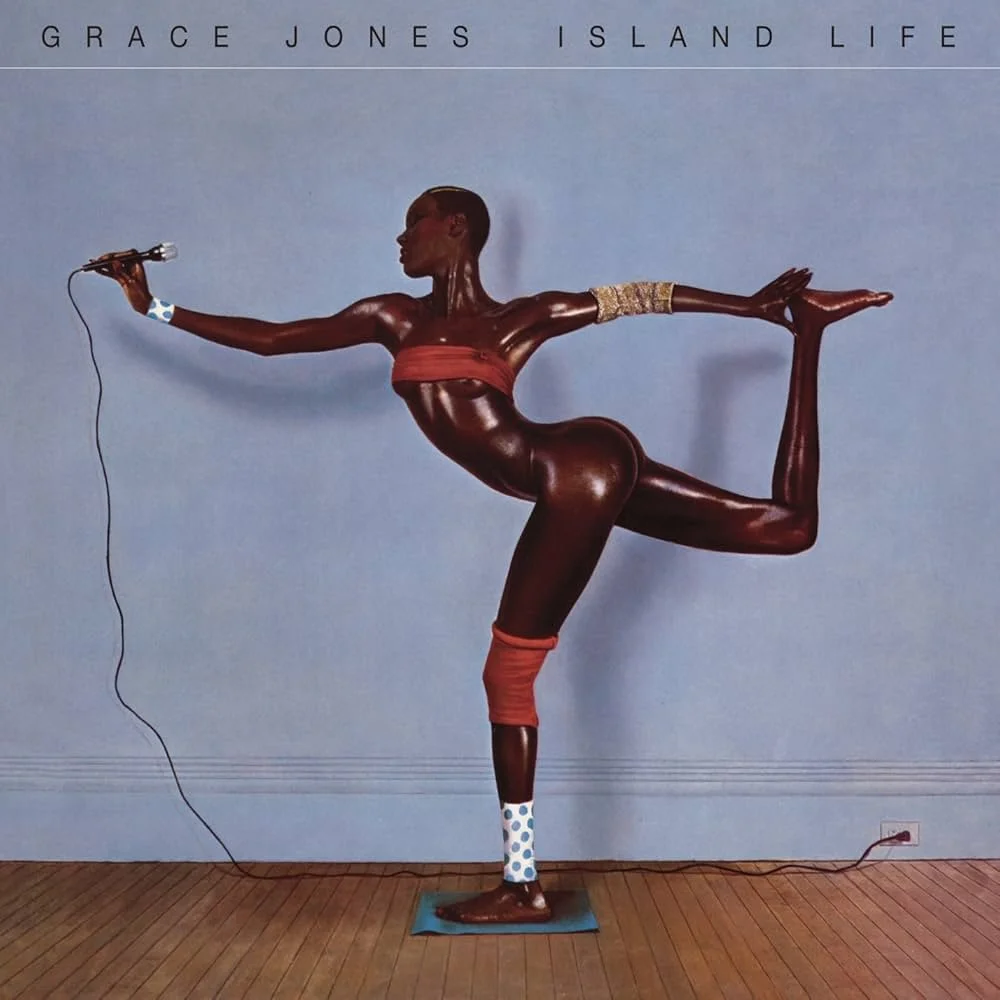
An important facet of Jones’ identity was her relationship with Jean-Paul Goude. Goude was an illustrator, graphic designer and photographer, and helped Jones shape her look into what she’s most known for. Her androgynous military-style hair, exaggerated angles and padded suits (often YSL) can be credited to Goude. He worked on her music videos, choreographed her live performances and decided what she wore. He also shot a few of her album covers, the most notably being Island Life, an image created by combining multiple shots into the final image (the old-school way without Photoshop, which Goude called French Correction). They were creative partners and partners in life, committed in a short relationship from 1977 to 1984 and having a son, Paulo. The most iconic image of Grace Jones was through the relationship between Jones and Goude (you know the one, its at the bottom of this article).
“I wanted to focus on Grace’s masculinity – to use what other people thought an embarrassment, and turn it around to her advantage. I wanted to create – with her, of course – a new character. It went beyond just a haircut, it was an attitude. It was new and strong and ambiguous. You didn’t know if it was a man trying to be a girl or a girl trying to be a man. It was a revolution. I remember the A&R guys at Island saying, “Are you fucking crazy? This is never going to work.” And of course it did.”
In 1981, Jones appeared on The Russell Hardy Show for an interview. Hardy turns away from Jones mid conversation to speak to another guest, and Jones snaps. She slaps him on the shoulder, more than once, in front of millions of viewers. The press went wild, calling her difficult and volatile, and other talk shows would avoid booking her. But Grace didn’t care, she didn’t apologise and she didn’t acknowledge the incident. She showed the world that she demanded respect. She would not be diminshed or ignored. You don’t turn your back on Grace Jones.
By the mid 1980s, Jones turned to acting. She played the last warrior of her tribe, Zula, a role so fierce that Arnold Schwarzengger reportedly said that she was too tough for him. She then appeared in the James Bond film A View to a Kill, as the assassin May Day. (She was also approached to be in the film Blade Runner but turned down the role, which would’ve been so iconic.)
Grace Jones was on top of the world in the 80s. She was a model, an actress, a muse, a performer.
But with the rise, comes the fall. In 1986 she was arrested in Jamaica for cocaine possession. She returned to the US and checked into rehab and got clean. Next, she found out that her accountant had been stealing half her money for years, taking care of her finances while robbing her blind. And then, the AIDS crisis. Her friends from New York, from Paris were dying. "I was depressed for two years, watching many of my friends die," Jones says in her biography. Designers, artists, DJs, makeup artists, friends, performers, dancers, all gone. Jones slipped away from the spotlight, moving between Paris and New York, Jones focused on her life and her son, Paulo.
While she removed herself from the world, the world began to find her. Designers referenced her style, musicians sampled her music, artists were using her as a reference. In 1999, Jones was ranked 82nd on VH1’s 100 Greatest Women of Rock and Roll. 19 years after her last studio album, Jones released Hurricane in 2008. She was 60 years old at the time, paving her way in an industry that throws women away at age 30. In 2012, she performed at Queen Elizabeth II’s Diamond Jubilee concert, singing Slave to the Rhythm while hula hooping at the same time, without stopping or dropping the hoop. The nerve to perform like this at a royal event, wearing a scultpural costume and hula hooping, showcases what makes Grace Jones special. She’s not contained by age, by expectations, by the industry. Billboard Magazine named her the 40th greatest dance club artist of all time in 2016. In 2018, Jones received the Order of Jamaica, one of the nation’s highest honours. She also appeared on Beyonce’s song MOVE, from her 2022 album Renaissance. On another note, she was also banned from Disney for life because she smoked a cigarette and exposed her chest while performing there in 1998 - love that for her.
Today, Grace Jones is in her 70s. She’s still performing when she wants to, still releasing music. She’s still the blueprint. She’s still the woman that will not be disrespected, defined or controlled. From the pentecostal churches of Jamaica, to the streets of Paris, to Studio 54 and to Buckingham Palace, Jones carved a path that no one else can follow. She was once too dark, too unsellable, too threatening, too volatile. Now she is what others strive to replicate and become. No exaggeration, she is the blueprint.
“I never try to look like anybody else. When someone reinvents themselves, you can’t recognise them any more – reinvention means becoming someone else. I’m the opposite of that. Madonna reinvents herself ... I’m just me. I’m not a diva or an icon. I hate those words. They’re used so much that they no longer have any meaning.”